

Declining Volta Sediment Could Worsen Coastal Erosion – Researchers
Ghana’s coastline is coming under increasing pressure, with researchers warning that coastal erosion could worsen in the coming years as sediment discharge from the Volta River continues to decline.
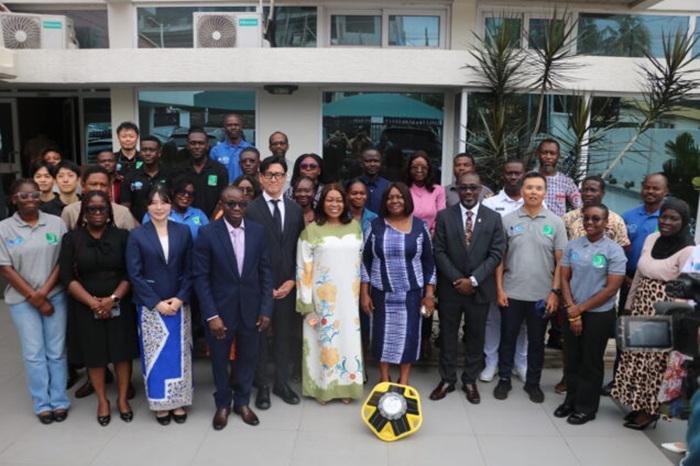
The warning follows preliminary findings from the Integrated Sediment and Environmental Management Project, a five-year initiative supported by the Japan International Cooperation Agency (JICA) and led in Ghana by the University of Cape Coast.
The project is using satellite data, cameras, drones, wave sensors and other monitoring equipment to assess shoreline changes, sediment movement and coastal hazards.
Researchers say their analysis of Ghana’s coastline over the past 20 years has identified the Volta River and Densu Delta areas as among the most seriously affected by coastal erosion.
Field observations have further highlighted the scale of the problem, with researchers recording about 10 metres of beach loss at Dzita in the Volta Region within just two months.
Lead researcher from the University of Tokyo, Professor Yoshimitsu Tajima, said the continued decline in sediment from the Volta River could worsen coastal erosion.
He explained that the reduction in sediment around the Volta River could accelerate shoreline retreat and create serious challenges for communities along the coast.
“The amount of sediment around the Volta River is very quickly decreasing. So, maybe in the future, the shoreline retreat will be accelerated, and that will be a serious problem,” Professor Tajima said.
The Vice Chancellor of the University of Cape Coast, Professor Dennis Aheto, said the project would provide stronger scientific evidence to support coastal management and policy decisions.
He said the research findings could be incorporated into broader models to help authorities develop appropriate measures for managing the country’s coastline.
Professor Aheto explained that the additional equipment being deployed under the project would enable researchers to measure wave heights, the extent of coastal erosion, bathymetry, salinity and other marine and ecological conditions.
The project is expected to generate more comprehensive data on changes along Ghana’s coastline and improve understanding of the factors driving coastal erosion.
Researchers believe the data will also strengthen efforts to identify areas that are particularly vulnerable to coastal hazards and determine appropriate interventions.
The initiative is expected to develop predictive systems that can help authorities anticipate changes along the coastline and identify suitable short- and long-term measures to protect coastal communities and infrastructure.
The findings are expected to contribute to broader efforts to improve coastal management and support evidence-based decision-making on Ghana’s increasingly vulnerable coastline.



