

Align Spending with 2026 Budget Plan – IFS to Govt
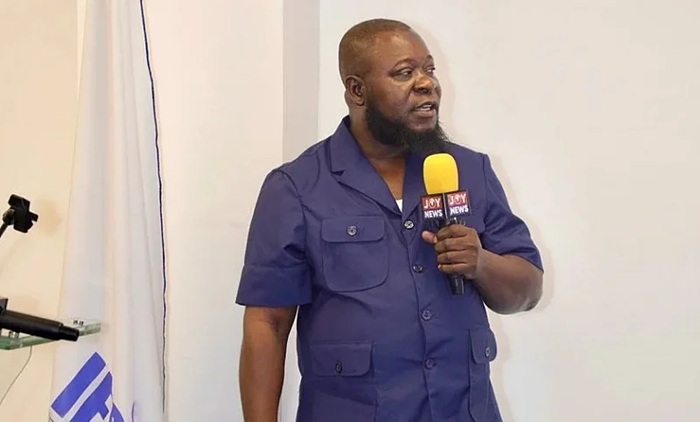
The Institute for Fiscal Studies (IFS) has urged government to improve budget execution by ensuring that approved expenditures are implemented in line with the 2026 budget plan, warning that significant underspending could undermine economic growth and the credibility of the budget.
Executive Director of the IFS, Dr. Said Boakye, said the government’s expenditure performance in the first half of 2026 fell significantly below its budgeted targets, particularly in areas critical to economic activity such as capital expenditure and the payment of arrears.
Speaking at the IFS’ assessment of the 2026 Mid-Year Budget Review and the government’s economic policy, Dr. Boakye said government had planned to spend GH¢172.5 billion, including arrears payments, during the first half of the year.
However, actual expenditure fell short by GH¢35.6 billion, representing 20.6 percent of the budgeted amount.
He said capital expenditure recorded a shortfall of GH¢14.35 billion, equivalent to 39.3 percent of the budgeted amount, while arrears payments fell short by GH¢8.64 billion, representing 61.8 percent of the amount planned.
“These two expenditure items are critical for economic growth and development,” Dr. Boakye said, explaining that arrears payments inject liquidity into the economy by enabling government contractors and suppliers to meet their obligations to businesses that depend on them.
He further warned that continued restrictions in government expenditure could weigh on economic growth, given the role of public spending as a component of Gross Domestic Product (GDP).
“It is no wonder, therefore, that non-oil real GDP growth momentum declined in the first quarter of 2026,” he said.
Financing shortfall
The IFS assessment attributed the significant expenditure gap largely to a shortfall in domestic budget financing rather than inadequate revenue mobilisation and foreign borrowing alone.
Dr. Boakye said the combined shortfall in total revenue and grants and foreign borrowing amounted to GH¢8.39 billion, which was less than one-quarter of the total expenditure gap of GH¢35.6 billion.
He said domestic financing of the budget, however, fell short by GH¢34.4 billion, representing 67.2 percent of the budgeted amount.
Dr. Boakye questioned why government accumulated resources in the sinking fund while important budgeted expenditures remained underfunded.
According to him, the Finance Minister had indicated that GH¢15.6 billion had been accumulated in the sinking fund by June 2026, despite the amount not being provided for in the initial 2026 budget.
Questions over budget credibility
Dr. Boakye raised concerns about the planning and credibility of the 2026 budget, questioning whether government anticipated the need to accumulate such a significant amount in the sinking fund when preparing the budget.
IFS recommendation
The IFS has consequently called on government to improve budget execution by spending in accordance with the approved budget plan, except where new revenue or financing constraints make such implementation impossible.
Dr. Boakye said financing decisions should be consistent with the expenditure priorities approved in the budget to avoid undermining economic growth.
“The government should therefore ensure that approved expenditures are fully implemented as budgeted, except when the new revenue and financing constraint prevented,” he said.
He added that the government’s decision to accumulate resources in the sinking fund, despite the absence of such a provision in the initial budget, had created complications for financing capital expenditure and arrears payments. “Going forward, the government should ensure that financing decisions are consistent with the budget plan,” Dr. Boakye said.



