

Trump Orders Major Changes to U.S. Childhood Vaccine Recommendations
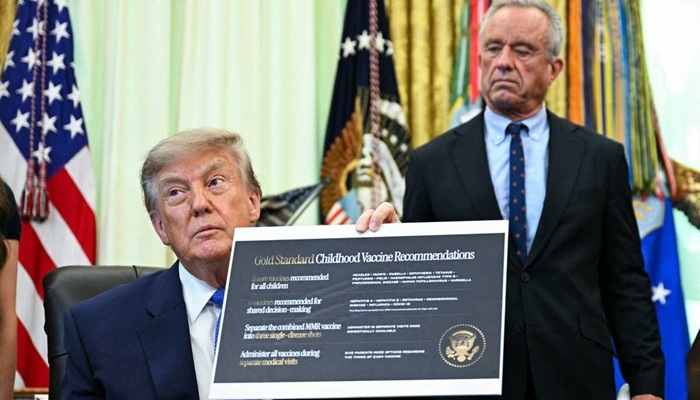
U.S. President Donald Trump has signed an executive order directing the government to reduce the number of childhood vaccines recommended for American children and to change how some vaccines are administered.
The executive order signed on Monday, August 10, calls for the measles, mumps and rubella vaccines to be separated into three individual shots. As well as, spacing out all childhood immunizations. The order also recommended reducing the number of childhood vaccines from 18, as recommended by the American Academy of Pediatrics (AAP), to 11 vaccines.
The administration said the changes are intended to provide parents more choice and bring U.S. vaccination recommendations closer to those in other developed countries. The executive order only acts as guidance, not an official mandate, as individual states have the authority to require vaccinations for school attendance.
Trump called the executive order “a major victory for parents rights, religious and constitutional rights, and for the gold standard science.”
However, public health experts have strongly criticized the move. The President of the AAP, Dr. Andre Racine, described Trump’s executive order as “dangerous.” Health experts have warned that changes to the vaccination schedule could leave children vulnerable to preventable diseases.
The issue has become particularly controversial because the Trump administration has repeatedly promoted a discredited claim that vaccines are linked to autism. Scientific research conducted over several decades has found no credible evidence that vaccines cause autism. In fact, major health organisations continue to support childhood vaccination as an effective way of preventing serious infectious diseases.
Republican Senator, Bill Cassidy, said the executive order was “wrong” in a social media post on X.
“The President does not have the expertise to make these changes,” Cassidy said. “Vaccines are overwhelmingly safe. Vaccines are effective. Vaccines do not cause autism.”
The move has intensified a wider debate in the United States over childhood vaccination, parental choice and the role of government in public health.



