GHS: No Cholera Outbreak After June 29 Floods
By Maame Efua Kwaduah
The Ghana Health Service (GHS) has assured the public that no cholera outbreak has been recorded following the devastating June 29 floods, despite growing concerns over deteriorating sanitation conditions in several affected communities.
Director-General of the Ghana Health Service, Dr Samuel Kaba Akoriyea, said although the floods created conditions that could trigger waterborne diseases such as cholera and typhoid, the country has so far not recorded any outbreak. He, however, stressed that the absence of reported cases should not lead to complacency, urging Ghanaians to prioritise sanitation and hygiene to prevent a public health crisis.
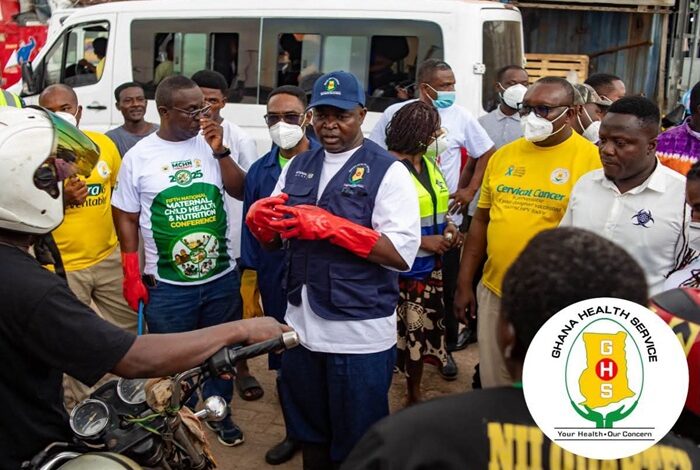
Speaking during the National General Cleaning Exercise, Dr Akoriyea said preventing disease is far more effective and less costly than responding to outbreaks after they occur.
“Fortunately, as of now, we don’t have any registered cholera outbreak. But prevention is key. We don’t need to wait for an outbreak before acting. Treatment is extremely costly,” he said.
Dr Akoriyea explained that the Ghana Health Service’s ongoing disinfection campaign forms part of broader measures to protect public health after the nationwide clean-up exercise directed by President John Dramani Mahama.
According to him, cleaning flood-affected communities alone is not sufficient, stressing that disinfection and fumigation of public spaces are equally important to eliminate disease-causing organisms and reduce the risk of outbreaks.
“After cleaning, the next step is disinfection and fumigation to avoid outbreaks of cholera, typhoid and other illnesses,” he stated.
He also called on residents to maintain clean surroundings, dispose of waste responsibly and support sanitation initiatives within their communities to sustain the gains made through the clean-up exercise.
The nationwide exercise, held on July 10 and 11, brought together government institutions, Metropolitan, Municipal and District Assemblies, security agencies, businesses and residents to clear waste, desilt drains and restore sanitation in flood-affected communities.
The exercise forms part of government’s broader strategy to improve environmental sanitation, minimise flood risks and prevent disease outbreaks during the rainy season.
The Ghana Health Service has reiterated that sustained community participation in sanitation activities remains essential to protecting public health and preventing future outbreaks of cholera, typhoid and other sanitation-related diseases.