Floods Are No Longer a Natural Disaster, They Are a National Failure
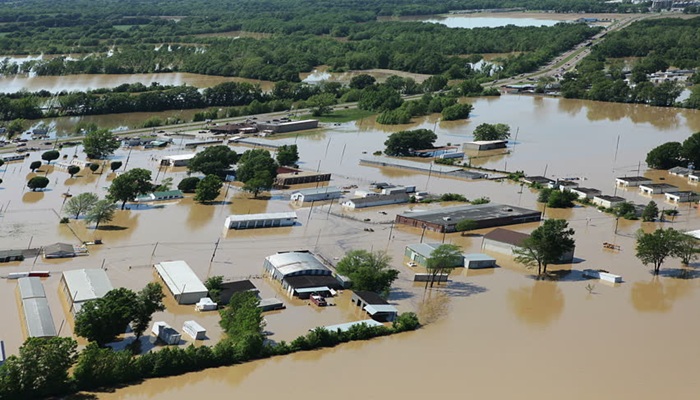
When the rains came down yesterday, they did what rains have always done. But once again, it was not the rain that failed Ghana, it was Ghana that failed to prepare for the rain.
Across Accra and several surrounding communities, roads became rivers, homes disappeared beneath muddy waters, businesses shut their doors, vehicles were abandoned, and countless families lost properties they had spent years building. Sadly, for some, the floods claimed lives, turning what should have been an ordinary rainy day into another national tragedy.
The painful reality is that these scenes are becoming too familiar. Every rainy season, Ghanaians watch the same images on television and social media people trapped in vehicles, children wading through waist-deep water, collapsed buildings, submerged markets, and emergency responders risking their lives to rescue victims. Then, after the floodwaters recede, the country moves on until the next heavy rainfall.
The question we must ask ourselves is simple: Why do we continue to experience the same disaster year after year?
The easy answer is climate change. Indeed, changing weather patterns have increased the intensity and unpredictability of rainfall across many parts of the world. However, climate change alone cannot explain why Accra continues to flood with such devastating consequences. The truth is that many of these floods are man-made disasters.
For years, drainage channels have been turned into dumping grounds for plastic bottles, sachet water wrappers, food containers, old furniture, construction debris, and every imaginable form of waste. During rainfall, these clogged drains cannot carry stormwater away, forcing water onto roads, homes, schools, and businesses.
Illegal structures continue to spring up on waterways, wetlands, and flood plains. Some buildings have been erected directly over natural drainage paths, reducing the city’s ability to absorb and channel excess water. Although authorities periodically demolish some of these structures, enforcement is often inconsistent, allowing new encroachments to emerge almost immediately.
Urban planning has also struggled to keep pace with Accra’s rapid expansion. The city’s population has grown significantly over the past two decades, yet drainage infrastructure has not expanded at the same rate. Roads have been constructed without adequate stormwater systems, while many existing drains are either too narrow, poorly maintained, or simply overwhelmed by the volume of runoff generated by modern urban development.
But government alone cannot shoulder the blame. Citizens must also confront uncomfortable truths.
Many people continue to dispose of refuse indiscriminately despite repeated public education campaigns. Others knowingly build in unauthorized locations or purchase land without verifying whether it lies within a flood-prone area. Some motorists ignore road closures during heavy rains, placing themselves and rescue teams in unnecessary danger.
Flood prevention is not only an engineering challenge, it is also a behavioural challenge. Every plastic bottle thrown into a gutter contributes to tomorrow’s flood. Every illegal building erected on a waterway increases the risk to neighbouring communities. Every act of environmental indiscipline carries consequences that eventually affect the entire city.
However, while citizens have responsibilities, government carries the greater obligation because it possesses the authority, regulatory powers, and resources to prevent these disasters before they occur.
Desilting drains only when the rainy season begins is not a flood management strategy. Emergency demolitions after lives have already been lost are not long-term solutions. Distributing relief items after disasters, while necessary, does not address the root causes.
First, planning regulations must be enforced consistently, regardless of political influence or economic status. Illegal developments on waterways should never be allowed to reach completion in the first place.
Second, substantial investment is needed to modernize drainage infrastructure. Much of Accra’s drainage network was designed decades ago for a much smaller population. Today’s city requires larger, interconnected drainage systems capable of handling increasingly intense rainfall.
Third, waste management requires urgent reform. This means expanding waste collection services, promoting recycling, strengthening enforcement against illegal dumping, and investing in public education that goes beyond seasonal campaigns.
Technology must also become part of Ghana’s flood management strategy. Early warning systems, improved weather forecasting, digital flood mapping, and real-time emergency communication can help reduce casualties and improve preparedness.
At the same time, local assemblies must be empowered and held accountable for environmental sanitation within their jurisdictions. Flood prevention cannot be managed solely from central government offices; it requires strong local governance backed by adequate resources and enforcement powers.
Every flood destroys productive assets. Businesses lose inventory. Traders lose income. Roads require expensive repairs. Insurance claims increase. Schools suspend classes. Healthcare costs rise due to waterborne diseases. Government diverts scarce public resources toward emergency relief instead of development projects.
The billions of cedis spent each year repairing flood damage could have financed new schools, hospitals, roads, or industrial projects. Instead, the country repeatedly pays for disasters that are, to a significant extent, preventable.
Ultimately, Ghana’s flood problem is not simply about rainfall. It is about governance, planning, enforcement, infrastructure, and civic responsibility. Yesterday’s floods should not become just another news story that disappears with the sunshine. They should serve as a national wake-up call.
Because until government commits to long-term urban planning, citizens embrace environmental responsibility, and institutions enforce existing laws without fear or favour, Accra will continue to flood not because the rains are stronger, but because our collective response remains too weak.
The rain may be beyond our control, the disaster that follows is not.