

CUTS Calls for Increased Road Fund Allocation in Mid-Year Budget
CUTS International is urging government to significantly increase allocations to the Road Maintenance Trust Fund in the upcoming Mid-Year Budget Review, warning that widespread rain-induced damage to roads, bridges and drainage systems is worsening transport costs and mobility challenges across the country.
The policy think tank says recent heavy rains have exposed the fragility of Ghana’s road infrastructure, turning sections of major highways and feeder roads into dangerous routes, with potholes deepening into gullies in several communities.
According to CUTS, the deteriorating condition of roads is already imposing a heavy economic burden on commuters, transport operators and businesses, with increased travel time, rising vehicle maintenance costs, higher fuel consumption and safety risks becoming daily realities.
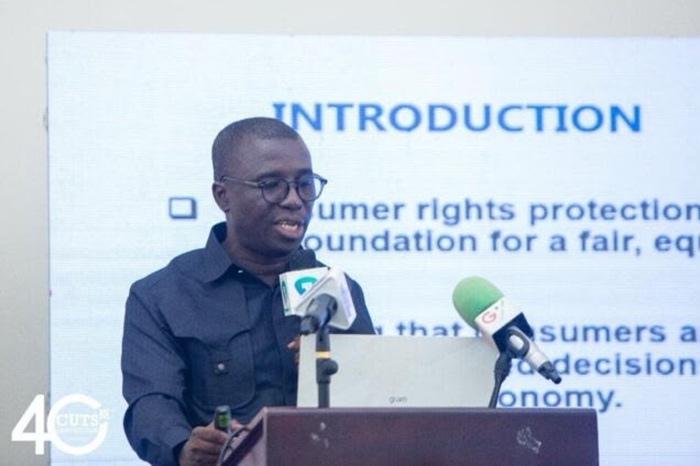
“Every day, ordinary Ghanaians are paying the price for bad roads. They spend more time in traffic, pay more to fix their cars, use more fuel and face higher risks on the road. This is no longer about minor potholes,” said Appiah Kusi Adomako, Director of the West Africa Regional Centre of CUTS International, Accra.
He stressed that temporary patching of potholes has proven ineffective, arguing that weak drainage systems, poor road foundations and recurring floods continue to undermine repairs and worsen road deterioration.
CUTS, however, commended government’s “Big Push” infrastructure agenda, particularly its focus on expanding new road networks, but cautioned that equal attention must be given to maintaining existing roads to prevent systemic failure.
“As government pursues its Big Push in road construction, we must remember that a road network is only as strong as its weakest link,” Mr. Adomako noted.
The organisation referenced the 2026 Budget allocation of approximately GH¢3.0 billion to the Ghana Road Maintenance Trust Fund, describing it as important but insufficient in the face of escalating infrastructure damage caused by heavy rainfall.
It warned that without additional funding in the mid-year review, Ghana risks falling further behind in maintaining critical road assets, with the cost ultimately transferred to citizens through higher transport fares, damaged vehicles and economic inefficiencies.
CUTS further called for Metropolitan, Municipal and District Assemblies (MMDAs) to be adequately resourced to respond swiftly to local road and bridge failures, noting that decentralised institutions are best placed to identify and address urgent infrastructure needs.
It also urged the Ministry of Roads and Highways to resolve outstanding issues surrounding the suspended National Roads Authority Act, 2024 (Act 1118), arguing that the delay is affecting efficient decentralised road management.
Additionally, CUTS renewed its call for the reintroduction of road tolls through a modern, technology-driven system, stating that toll revenues remain a critical and sustainable source of funding for road maintenance.
“A modern tolling system is transparent, efficient and easy to account for. Revenue must go directly into road maintenance, and Ghanaians must see clear results on the roads they use every day,” Mr. Adomako added.
CUTS concluded that while Ghanaians may not expect perfect roads, they deserve safe and functional infrastructure that connects them to livelihoods, services and markets, warning that continued neglect will place unnecessary strain on the broader economy.



