

Africa Policy Lens Calls for Urgent Amendment of GoldBod Act
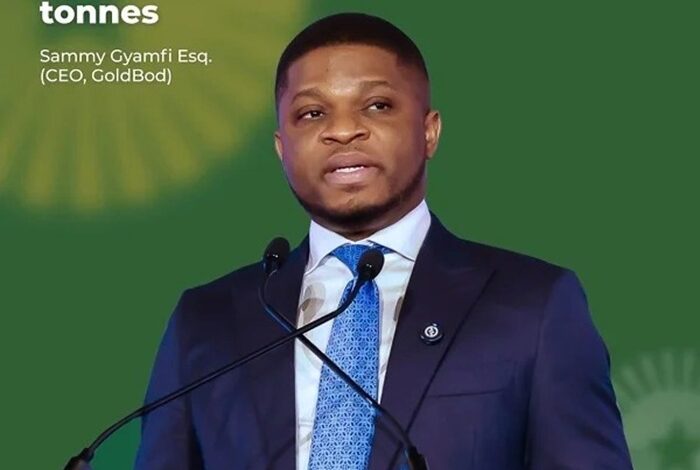
The Africa Policy Lens (APL) has called for urgent amendments to Section 25 of the Ghana Gold Board (GoldBod) Act, warning that existing provisions could lead to institutional mandate conflicts, governance challenges, and potential financial losses to the state.
In a statement the policy think tank expressed concern over what it described as GoldBod’s growing involvement in upstream small-scale mining activities, arguing that such interventions fall outside the Board’s core mandate.
The concerns follow GoldBod’s recent collaboration with the Forestry Commission and the Ghana Armed Forces to reclaim portions of the Tano Nimiri Forest Reserve degraded by illegal mining activities. The GH¢36.35 million project is expected to restore 50 hectares of land affected by years of illegal mining.
While acknowledging the importance of reclamation efforts, APL argued that existing state institutions already have the legal mandate and technical capacity to undertake such work.
It noted that reclamation of degraded mine sites has historically been carried out by agencies such as the Minerals Commission, NAELP, the Forestry Commission and the Ghana Landscape Restoration and Small-Scale Mining Project, under the Ministry of Lands and Natural Resources.
According to APL, GoldBod’s involvement in such activities raises concerns of mandate duplication and institutional overlap within the natural resources sector.
The think tank argued that although Section 3(g) of the Act may be cited to justify the reclamation exercise, the provision’s broad scope creates risks of overlapping functions and the gradual evolution of GoldBod into a de facto upstream regulator of small-scale mining.
APL also referenced GoldBod’s planned collaboration with the Ghana Geological Survey Authority and the Minerals Commission to conduct geological exploration in selected areas for artisanal and small-scale mining.
It cited a Right to Information response from the Minerals Commission dated May 18, 2026, indicating that the Commission provides blocked-out area data to the Ghana Geological Survey Authority to support geological investigations on behalf of GoldBod.
The organisation said this development raises further questions about the roles of statutory institutions in the mining sector and risks undermining established mandates.
APL warned that continued involvement of GoldBod in upstream mining activities, under the guise of funding and support, could weaken institutional independence, distort accountability structures, and create parallel governance systems within the sector.
The group also raised concerns about the management of funds under Section 25 of the GoldBod Act, arguing that allocations should be transferred directly to mandated public institutions rather than administered by the Board.
It further proposed amendments to ensure that GoldBod does not retain authority over guidelines governing the allocation, disbursement, and utilisation of such funds.
APL maintained that GoldBod should focus strictly on its core mandate under the Ghana Gold Board Act, while allowing institutions with statutory responsibility and technical capacity to lead upstream small-scale mining activities.



