

MTN Ghana Boosts Healthcare Delivery Y’ello Care Initiative
By Maame Efua Kwaduah
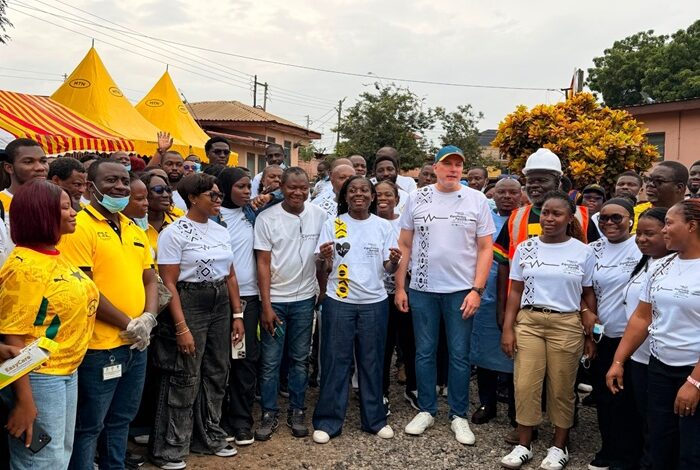
MTN Ghana has intensified efforts to support healthcare delivery across the country through the refurbishment of hospital beds and furniture under its annual 21 Days of Y’ello Care programme.
The telecommunications company is undertaking the intervention in partnership with private health insurer Dosh, which has committed a GH¢1 million health insurance package to settle the medical bills of patients who have been discharged but remain in hospital because they are unable to pay. Beneficiaries will also receive one year of health insurance coverage for future medical care.
Speaking during a refurbishment exercise at Maamobi Hospital, Chief Executive Officer of MTN Ghana, Stephen Blewett, described the 21 Days of Y’ello Care as one of the company’s flagship employee volunteer programmes, noting that the initiative goes beyond financial donations by encouraging staff to actively participate in community development projects.
He said the campaign, which runs throughout June, mobilises MTN employees across the country to contribute their time and skills to projects that directly improve the lives of Ghanaians.
According to Mr. Blewett, the company has already refurbished 1,700 hospital beds, with work underway to increase the number to 3,000 before the end of the campaign.
He explained that the exercise involves repairing defective hospital beds, replacing worn-out mechanical parts, repainting the beds, reupholstering furniture and refurbishing wooden furniture and equipment in hospital wards.
“The objective is to ensure that patients recovering from surgery and other illnesses receive care in safe and comfortable environments with functional hospital equipment,” he said.
Mr. Blewett observed that while hospitals are primarily established to provide healthcare services, many struggle to keep up with infrastructure maintenance because of competing operational demands.
He said MTN’s intervention is intended to help bridge that maintenance gap and restore facilities to acceptable standards, making future maintenance easier for health institutions.
He called on other corporate organisations to support Ghana’s healthcare system, stressing that collective corporate investment in hospital infrastructure would significantly improve healthcare delivery across the country.
“If every major corporate institution contributed to maintaining healthcare facilities, imagine what our healthcare system would look like,” he stated, adding that supporting healthcare ultimately means supporting vulnerable people.
Beyond physical infrastructure, Mr. Blewett said MTN is increasingly focusing on technology-driven healthcare solutions, including health technology and artificial intelligence, to improve healthcare delivery in the future.
He noted that the refurbishment exercise is being carried out in hospitals across the country and is not limited to facilities in Accra.
As part of the initiative, Dosh is providing health insurance support to approximately 100 patients across nine health facilities, including Mamprobi General Hospital, Ashaiman Government Hospital, Korle Bu Teaching Hospital, Koforidua Regional Hospital and Takoradi Hospital.
Head of Sales and Marketing at Dosh, Belinda Amo, said the company partnered MTN because both organisations share a common vision of improving access to healthcare through innovative solutions.
She explained that, in addition to settling outstanding medical bills, beneficiaries will receive annual health insurance cover to cater for subsequent medical reviews, consultations and claims.
Ms. Amo said Dosh currently offers an annual health insurance policy at a basic premium of GH¢365, providing coverage of up to GH¢9,000.
She added that customers can subscribe through MTN Mobile Money by selecting the Dosh option under Financial Services or by accessing the company’s online platforms.
The collaboration forms part of broader efforts by MTN Ghana and Dosh to improve healthcare access, strengthen hospital support systems and reduce the financial burden on vulnerable patients while promoting sustainable healthcare interventions nationwide.



