

World Leaders Face Tough Talks at G7 Summit
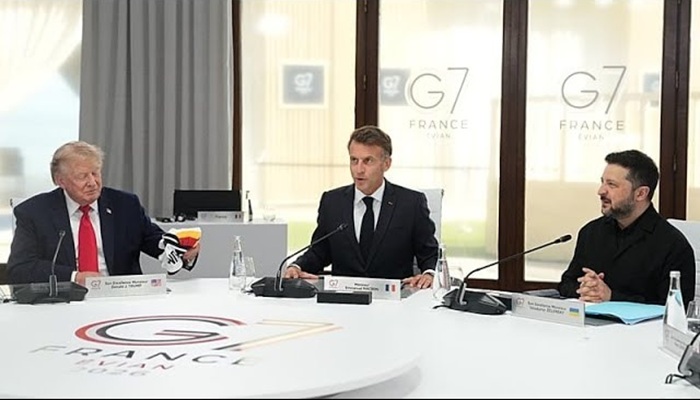
World leaders gathering in France for the G7 summit are facing high stakes discussions on two major global crises: the war in Ukraine and instability in the Middle East.
Ukrainian President Volodymyr Zelenskyy is attending the summit as leaders search for ways to end Russia’s invasion, now in its fifth year. The talks come at a tense moment, with Moscow launching fresh drone and missile attacks on Ukrainian cities that killed at least 11 people.
The discussions also follow a breakthrough announcement by U.S. President Donald Trump, who recently revealed an agreement to end the conflict with Iran. That deal has shifted international attention back to Ukraine, where the war continues to devastate communities and strain global security.
President Trump said he has spoken with both Zelenskyy and Russian President Vladimir Putin and wants renewed focus on ending the war. He stressed that the summit offers a chance to push forward peace efforts and reduce the suffering caused by the conflict.
Middle East security is another key issue on the agenda. Leaders from Egypt, Qatar, and the United Arab Emirates have joined the talks to discuss regional stability and efforts to reopen the Strait of Hormuz. The waterway is one of the world’s most important shipping routes, and its closure has disrupted global trade and energy supplies.
The summit is taking place against a backdrop of rising diplomatic tensions and economic uncertainty. Analysts say the meeting is a crucial test of international cooperation, as leaders must balance urgent security concerns with the need to stabilize the global economy.
For Ukraine, the presence of President Zelenskyy underscores the importance of keeping the war at the center of global attention. His participation is expected to strengthen calls for more support from Western allies and highlight the human cost of Russia’s ongoing attacks.
For the Middle East, the involvement of regional leaders signals recognition that instability in the region has global consequences. Efforts to reopen the Strait of Hormuz are seen as vital to restoring confidence in international trade and preventing further economic shocks.
The G7 summit traditionally brings together the world’s most advanced economies to coordinate responses to global challenges. This year, the stakes are particularly high as leaders confront overlapping crises that threaten both security and prosperity.



