

Flooding Disrupts Movement at KNUST Campus
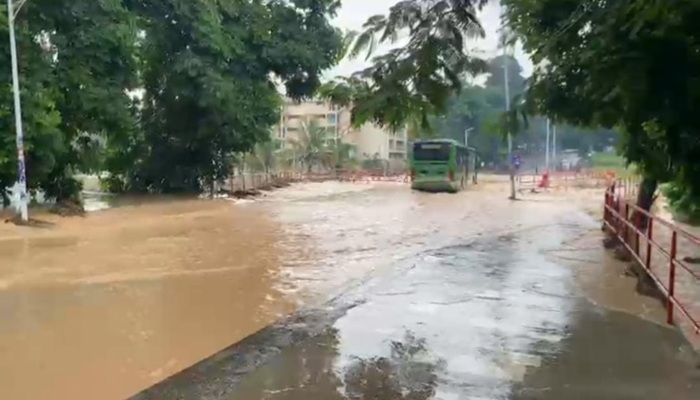
Heavy flooding on parts of the Kwame Nkrumah University of Science and Technology campus disrupted movement and academic activities on Thursday morning, leaving many students stranded between their halls of residence and lecture venues.
The flooding was triggered by a heavy downpour that overwhelmed drainage systems across sections of the campus. Several key roads, bridges, and walkways were rendered impassable, forcing students to either remain indoors or take longer alternative routes to reach lecture halls.
University buses capable of navigating some of the flooded areas were deployed to transport students, easing the situation slightly. However, taxis and smaller vehicles were unable to use many of the inundated routes, worsening delays and limiting access.
Security personnel were stationed across affected areas to monitor the situation and direct traffic, ensuring the safety of students and staff. Despite these measures, movement across campus was significantly slowed, and normal academic activities were disrupted, particularly during the morning hours.
As of Thursday afternoon, university authorities had not yet issued an official statement on the extent of the disruption or any immediate remedial measures. Students expressed frustration over the recurring flooding problem, calling for urgent interventions to improve drainage systems and prevent future disruptions.
Many students raised concerns about accessibility and safety, noting that the flooding not only delays academic work but also poses risks during the rainy season. They urged authorities to prioritize long term solutions to protect the campus community.
The incident highlights ongoing infrastructure challenges at KNUST, where heavy rains often expose weaknesses in drainage and road networks. While temporary measures such as bus transport and traffic control help manage the situation, students say more permanent solutions are needed to safeguard academic activities.
Observers note that the flooding reflects broader issues facing urban areas in Ghana, where poor drainage and rapid development often combine to worsen the impact of heavy rains. For KNUST, the disruption underscores the importance of investing in resilient infrastructure to support its growing student population.
Until authorities announce concrete steps, students remain concerned that similar incidents will continue to affect teaching and learning during the rainy season.



