BoG’s Consultative Approach Helping Shape Economic Recovery
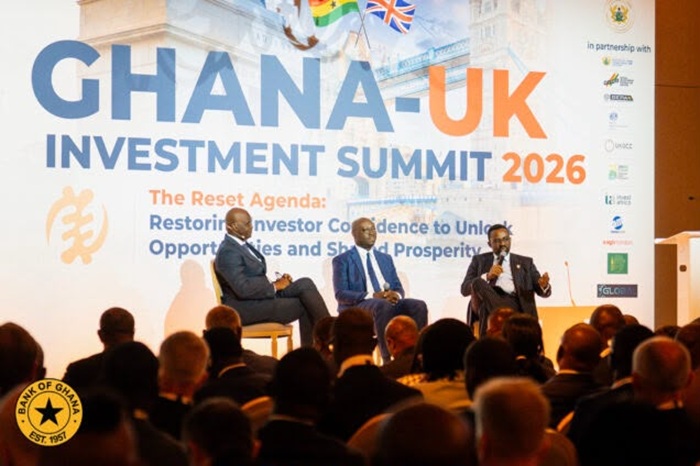
Governor of the Bank of Ghana, Dr. Johnson Pandit Asiama, says the central bank’s more consultative and listening-based leadership approach has become a key driver of Ghana’s ongoing economic recovery and policy reforms.
Speaking at the Ghana-UK Investment Summit in London, Dr. Asiama said one of the major changes introduced since assuming office was the decision to “demystify” the Bank of Ghana by deepening engagement with businesses, traders, financial institutions and other stakeholders across the economy.
According to him, experiences gained while outside the central bank exposed him to public concerns and criticisms about the institution, which influenced his approach upon returning as Governor.
“We listen more because good policy comes from understanding the problems people face,” he stated.
Dr. Asiama explained that the Bank now regularly consults organisations including the Ghana Union of Traders’ Associations and other business groups to better understand the operational challenges affecting economic activity.
He noted that some of the consultations directly informed reforms within Ghana’s foreign exchange market framework.
The Governor also cited concerns raised by digital content creators and online entrepreneurs who experienced challenges receiving payments from international digital platforms.
According to him, engagement with the affected groups enabled the central bank to identify operational bottlenecks and implement measures that restored payment flows.
Dr. Asiama said the Bank of Ghana and the Ministry of Finance entered office with a common understanding of the economic challenges confronting the country and have since worked closely to implement stabilisation reforms.
He disclosed that one of the first major decisions taken by the Monetary Policy Committee was to raise the policy rate from 27 percent to 28 percent to curb inflation and restore confidence in the economy.
“The hardest decision was the hike in the first MPC from 27 per cent to 28 per cent, which then made the easing that followed credible,” he explained.
The Governor said the central bank subsequently implemented a four-pillar recovery strategy focused on tight monetary policy, liquidity management, reserve accumulation and financial sector strengthening.
He added that reforms within the remittance sector also helped improve foreign exchange inflows by ensuring remittance proceeds passed through the formal banking system.
According to Dr. Asiama, remittance inflows reached nearly US$8 billion last year, providing critical support for exchange rate stability and broader macroeconomic recovery.
He further revealed that the Bank is developing new investment products targeted at the Ghanaian diaspora, including plans to tokenise gold-backed investment instruments to attract additional capital inflows.
Dr. Asiama described the Ghanaian diaspora as an important source of long-term investment capital capable of supporting national development and economic resilience.
He reiterated that maintaining macroeconomic stability remains central to the mandate of the Bank of Ghana and expressed confidence that ongoing reforms would strengthen investor confidence and improve the country’s economic outlook.