BoG Pushes Forward-Looking Policies to Sustain Economic Growth
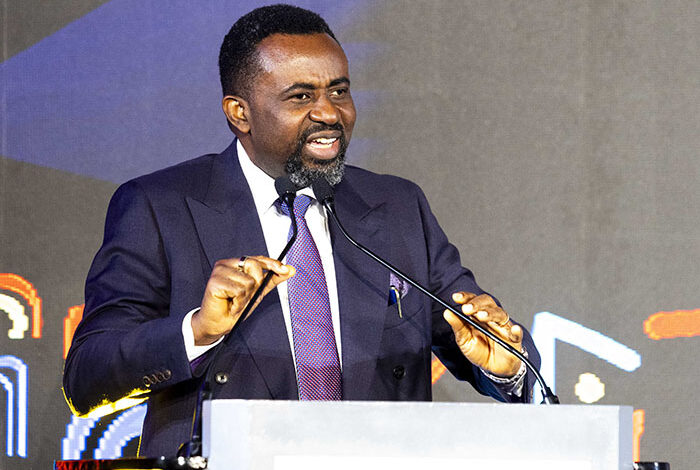
Governor of the Bank of Ghana, Dr. Johnson Pandit Asiama, has reaffirmed the central bank’s commitment to maintaining macroeconomic stability through forward-looking and data-dependent monetary policies aimed at supporting sustainable economic growth.
He said Ghana continues to face significant global economic risks, including geopolitical tensions, supply chain disruptions and financial market uncertainties, which pose challenges particularly for emerging economies.
He made the remarks at the 10th Ghana CEO Summit in Accra.
According to him, the Bank of Ghana’s responsibility goes beyond reacting to economic events, stressing that the central bank must anticipate risks, anchor expectations and maintain conditions that support long-term growth and resilience.
Dr. Asiama disclosed that the Bank of Ghana has undertaken several reforms to reinforce policy credibility and strengthen confidence in the financial system.
He explained that the central bank has improved its monetary policy framework, enhanced liquidity management operations to improve monetary policy transmission, strengthened reserve regulations and increased transparency and accountability in policy making.
He noted that the reforms form part of a broader institutional strategy aimed at restoring trust, credibility and resilience within Ghana’s economy.
Touching on financial stability, Dr. Asiama said sustainable economic transformation cannot be achieved without a resilient and stable financial system.
He explained that financial stability directly affects businesses seeking credit, entrepreneurs pursuing expansion, households saving for the future and investors seeking growth opportunities.
According to him, the Bank of Ghana is now adopting a more quality-focused, forward-looking and risk-sensitive supervisory approach to strengthen the country’s financial sector.
He said the central bank is enhancing its surveillance systems to identify vulnerabilities early and take prompt action to prevent emerging threats.
Dr. Asiama outlined six key priorities guiding the Bank of Ghana’s financial stability strategy, including proactive risk identification and mitigation, promoting innovation alongside resilience, strengthening governance and accountability, building capacity for emerging risks and integrating climate and environmental risks into organisational frameworks.
On innovation and economic transformation, the Governor stated that innovation has become essential for productivity, competitiveness and economic evolution.
He urged business leaders and chief executives to embrace technology and cultivate innovation-driven organisational cultures capable of adapting quickly to changing global economic trends.
Dr. Asiama said technological advancements including artificial intelligence, cloud computing and digital finance are reshaping global business models and market structures.
He stressed that Ghana and Africa cannot afford to remain behind in the ongoing technological transformation.
The Governor revealed that the Bank of Ghana has established a FinTech and Innovation Department, a Data Analytics and Artificial Intelligence Department, as well as a Digital Assets Regulatory Department as part of efforts to promote an inclusive and efficient financial ecosystem.
According to him, digital finance is already improving access to payments, savings, credit, investments and other financial services while reducing transaction costs and expanding financial inclusion.
Dr. Asiama also disclosed that significant progress has been made in exploring the electronic cedi, Ghana’s proposed Central Bank Digital Currency, following the successful completion of its pilot phase.
He explained that the initiative reflects the Bank of Ghana’s commitment to exploring sovereign digital currency systems to improve payment systems and support economic transformation.
The Governor further noted that the central bank is leveraging cloud computing, data analytics and artificial intelligence to strengthen policy analysis, improve decision-making processes and enhance operational efficiency.
However, he cautioned that innovation must be pursued responsibly, stressing the need for strong governance systems, ethical standards, cybersecurity resilience and consumer protection measures.
Dr. Asiama stated that the challenge for policymakers and businesses is not merely to digitise operations but to ensure that digital transformation remains inclusive and responsible.
He further called on business leaders, policymakers and regulators to work together to drive Ghana’s economic transformation.
According to him, priorities such as economic diversification, value addition and industrialisation, stronger public-private collaboration, governance and institutional integrity will be critical to achieving sustainable growth.
Dr. Asiama stressed that Ghana’s economic transformation will require disciplined policy choices, resilient institutions, innovative businesses and courageous leadership.
He noted that the progress made so far demonstrates that economic transformation can be achieved when institutions act decisively, policy coordination is strengthened and the public and private sectors collaborate effectively.
The Governor urged stakeholders to move beyond discussions and take concrete steps toward building a more competitive, innovative and resilient economy that creates opportunities for all citizens.