Ghana Risks Returning to IMF Without Fiscal Discipline
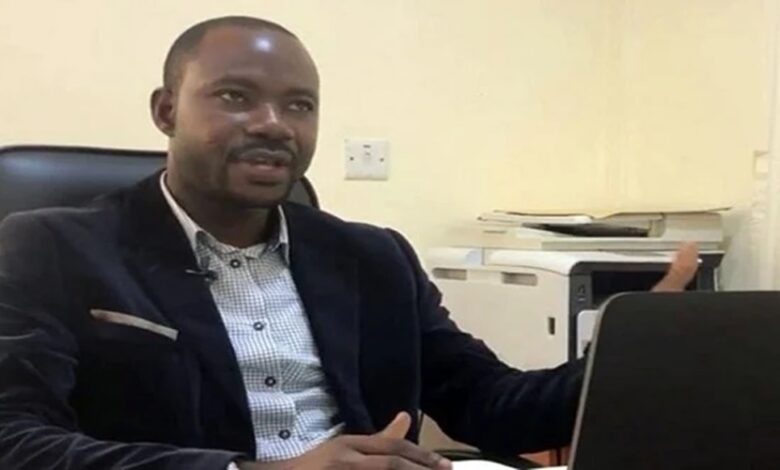
The Executive Director of the Centre for Policy Scrutiny, Dr Adu Owusu Sarkodie, has warned that Ghana could find itself returning to the International Monetary Fund, IMF, within the next few years if the country fails to maintain fiscal discipline and implement strong structural economic reforms after the completion of its current bailout programme.
Speaking in a media interview on Tuesday, May 19, 2026, Dr Sarkodie said Ghana’s long-standing pattern of excessive government spending and weak expenditure controls after exiting IMF programmes continues to undermine the country’s economic progress and investor confidence.
According to him, although Ghana has made considerable progress in stabilising the economy under the IMF-supported Extended Credit Facility programme, the country still remains vulnerable because it has historically struggled to maintain economic discipline once IMF supervision is relaxed.
“Historically, we have not been able to maintain the discipline. That is why we keep going to the IMF, then we come back, we misbehave, then we go to them again,” he stated.
Dr Sarkodie revealed that his own statistical assessment showed Ghana has, on average, returned to the IMF every four years since independence, describing the trend as worrying for a country blessed with abundant natural resources and enormous economic potential.
He pointed out that Ghana exited its previous IMF programme in 2019 but had already returned to the Fund by 2023 following the country’s severe economic crisis.
“The last IMF programme ended in 2019, and by 2023, we were back again. That tells you there is still doubt about our ability to sustain fiscal discipline on our own,” he stressed.
His comments come at a time when government has announced the successful completion of Ghana’s IMF bailout programme and the country’s transition to the IMF’s Policy Coordination Instrument, commonly referred to as the PCI.
The PCI is a non-financial arrangement intended to provide policy coordination, technical guidance and investor confidence rather than direct financial assistance.
According to Dr Sarkodie, the introduction of the PCI arrangement reflects continuing concerns among international investors about Ghana’s commitment to prudent economic management.
“The IMF Executive Director himself said there is doubt among investors that Ghana may not be able to keep the discipline. That is one of the reasons the PCI is still needed to keep us in check,” he explained.
He added that the arrangement could help restore investor confidence and improve Ghana’s chances of regaining access to the international credit market after the country was effectively shut out of the Eurobond market during the peak of the economic crisis in 2022.
Despite recent signs of economic recovery, Dr Sarkodie cautioned that the macroeconomic gains being highlighted by government have not yet translated into meaningful improvements in the living conditions of ordinary Ghanaians.
He explained that although inflation has declined significantly and the Ghana cedi has strengthened against major foreign currencies, many households continue to struggle with the high cost of living and reduced purchasing power.
“The IMF focuses on the macroeconomy — inflation, debt, reserves and exchange rates — but the ordinary Ghanaian is thinking about pocket economics,” he stated.
Using an analogy to explain inflation, Dr Sarkodie said inflation behaves like a thief.
“In the past, the thief was stealing 100 cedis from you. Now the thief is stealing 20 cedis. The hardship has reduced, but the thief is still stealing,” he remarked.
The CPS Director further warned that Ghana’s economy remains fragile and highly vulnerable to external shocks despite recent improvements.
According to him, recent increases in fuel prices and tomato prices, partly caused by geopolitical tensions in the Middle East and supply disruptions from Burkina Faso, demonstrate how exposed the economy still is to global and regional developments.
“We have recovered from the symptoms of the crisis, but we have not built a resilient economy yet. The economy can walk small, small, but it cannot run,” he stated.
Dr Sarkodie therefore called on government to implement measures that will sustain the current economic gains, strengthen fiscal discipline and ensure that Ghana does not return to the Bretton Woods institution for another bailout programme in the near future.