Policy Rate Cuts Won’t Spur Growth– Economist
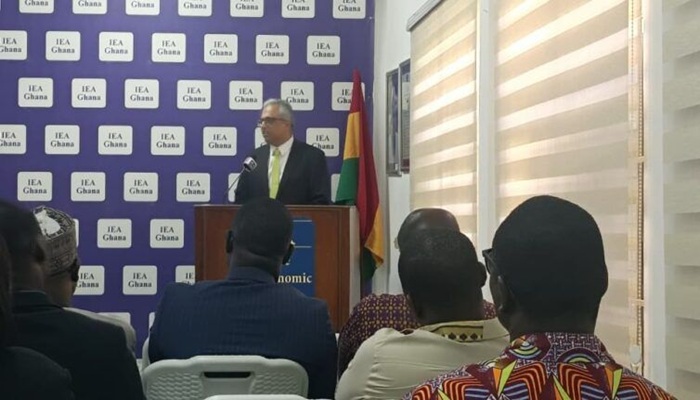
An economist at Aston University, Sajid Chaudhry, has cautioned that reductions in the policy rate alone may not be enough to accelerate economic growth in Ghana unless commercial banks transmit those reductions into lower lending rates for businesses and households.
Speaking at a forum on interest rates and economic development in Ghana, Dr. Chaudhry argued that the effectiveness of monetary easing depends largely on whether borrowers actually experience lower financing costs through reduced bank lending rates.
According to him, lower borrowing costs remain essential for stimulating investment, expanding private-sector activity and supporting stronger economic growth.
“Monetary easing can support growth in Ghana, but only if it is transmitted through lower lending costs, stronger private-sector credit, stable exchange rates, and healthier bank balance sheets,” he stated.
Dr. Chaudhry expressed concern about what he described as the slow transmission of policy rate reductions by commercial banks, noting that lower benchmark rates do not automatically translate into cheaper credit for the real economy.
He explained that his analysis of Ghana’s economic data covering the period from 2002 to 2024 found a clear relationship between lower lending rates and improved economic performance.
According to him, periods of reduced borrowing costs were associated with stronger growth in Gross Domestic Product (GDP), while persistently high interest rates and inflation tended to weaken overall economic activity.
The economist observed that many commercial banks continue to maintain relatively wide net interest margins despite improvements in macroeconomic conditions.
He attributed this to several structural challenges, including elevated non-performing loans, exchange-rate volatility and broader uncertainty within the economic environment.
According to Dr. Chaudhry, these conditions reduce the willingness of banks to aggressively lower lending rates even when the central bank adopts a more accommodative monetary policy stance.
“Policy should therefore combine monetary easing with measures that strengthen credit intermediation and bank balance sheets,” he said.
He nevertheless commended the Bank of Ghana for aligning monetary policy decisions with the recent moderation in inflation.
To improve policy effectiveness, Dr. Chaudhry recommended stronger regulatory actions to encourage faster transmission of policy rate adjustments through the banking system.
“The central bank can use some kind of regulatory measures to persuade banks to translate monetary policy rate cuts into lower lending rates,” he stated.
Responding to questions from the media, he also urged commercial banks to strengthen internal credit management processes through more effective loan screening, monitoring and recovery mechanisms.
At the same time, he encouraged businesses to improve operational efficiency and repayment discipline to help reduce credit risks within the financial sector.
“When banks have high levels of bad loans, they are less willing and able to pass lower policy rates through to cheaper lending, which weakens the impact of monetary easing on growth,” he explained.
Dr. Chaudhry further called on government to sustain macroeconomic stability through prudent fiscal management, controlled inflation, exchange-rate stability and a resilient banking system.
He noted that maintaining these conditions would create a more supportive environment for lower lending rates, improved credit access and stronger long-term economic growth.