Bond Market Activity Turnover Drops to GH¢559m
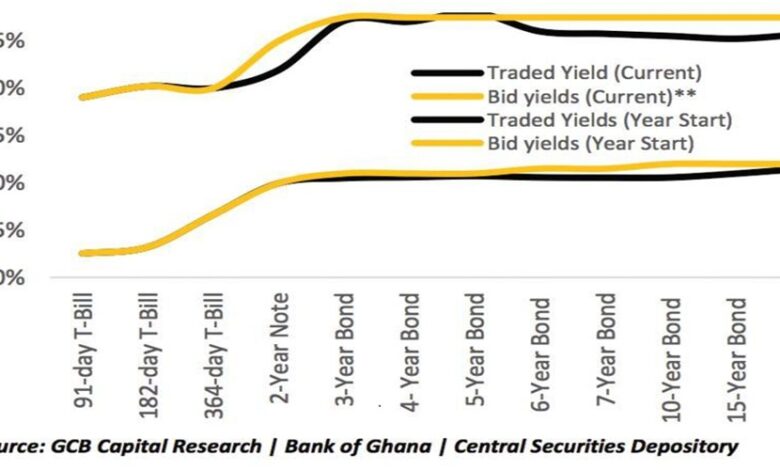
Ghana’s secondary bond market recorded a sharp slowdown in trading activity, with aggregate turnover plunging by 66.88% week-on-week to GH¢559 million, reflecting cautious investor positioning and reduced liquidity across the curve.
According to Databank Research, market activity was largely concentrated in the short-to-medium term maturities, as investors continued to avoid long-dated securities amid lingering uncertainty.
Front-to-Belly Segment Dominates
Trading was heavily skewed toward the 2031–2034 segment, which accounted for 51.14% of total turnover. These instruments cleared at a weighted-average yield of 12.50%, indicating relatively higher return expectations for mid-term bonds.
The 2027–2030 segment made up the remaining 48.86% of activity, with trades executed at a lower weighted-average yield of 11.06%, suggesting stronger demand for shorter-duration instruments with comparatively lower risk exposure.
Long-End Remains Quiet
In contrast, the long end of the curve (2035–2038) saw little to no activity, highlighting persistent investor aversion to extended-duration bonds. This trend reflects broader market caution, as investors remain sensitive to interest rate risks and macroeconomic uncertainties.
The muted participation at the long end suggests that confidence in long-term rate stability is still evolving, even as broader macroeconomic indicators show signs of improvement.
New 7-Year Bond Sees Limited Interest
The newly issued 7-year bond maturing in 2033 attracted only modest attention, recording turnover of GH¢15.52 million at a weighted-average yield of 12.10%.
While this indicates some appetite for mid-tenor instruments, the relatively low volume underscores the cautious stance of market participants.
Outlook: Rebalancing May Lift Activity
Despite the recent decline, Databank Research expects a rebound in trading activity in the near term, driven by end-of-month portfolio rebalancing by institutional investors.
Such flows typically enhance liquidity and could support stronger turnover across the yield curve, particularly within the actively traded short- to medium-term segments.
For now, the market remains selective, with investors favouring liquidity, shorter durations, and clearer yield visibility as they navigate an evolving macroeconomic environment.