Central Region MMDAs Protest Zoomlion Fee Deductions
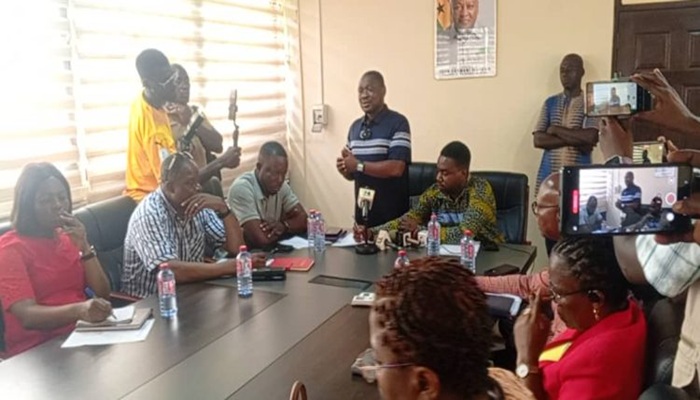
Some Metropolitan, Municipal and District Assemblies (MMDAs) in the Central Region have protested the continued deduction of fumigation fees for Zoomlion Ghana Limited from the District Assemblies Common Fund (DACF).
They argue that there is little or no evidence to show that the services are actually being carried out.
According to the Assemblies, the deductions often running into thousands of cedis each quarter have significantly constrained their budgets, limiting their ability to fund critical projects such as road maintenance, educational infrastructure and healthcare delivery.
Officials from the affected Assemblies, during separate interactions with the Parliamentary Select Committee on Sanitation and Water Resources, indicated that formal complaints had been submitted over the arrangement, which they described as “unjust,” yet no corrective action had been taken.
They traced the situation to a 2022 policy directive that introduced source deductions to facilitate payments to Zoomlion Company Limited. However, they argued that the policy lacked effective monitoring systems to confirm whether the contracted services were delivered.
Zoomlion Ghana Limited, a key waste management firm operating under the Zoomlion Foundation, has contracts with the Ministry of Local Government and Rural Development to undertake nationwide fumigation exercises aimed at controlling diseases such as cholera and malaria.
The concerns emerged during a two-day inspection tour by the Committee, which assessed sanitation and water service delivery in selected Assemblies in the Central Region. The tour concluded on Friday, April 24.
The Assemblies involved included Mfantseman, Fosu and Komenda-Edina-Eguafo-Abrem Municipalities, as well as the Cape Coast Metropolis.
The exercise formed part of broader government efforts to enhance sanitation systems, reduce disease outbreaks and improve access to safe water nationwide.
It also aligned with the Committee’s oversight mandate to obtain first-hand information on operational challenges facing Assemblies within the water and sanitation sector.
Joining the delegation were representatives from the Ghana Water Company Limited, the Community Water and Sanitation Agency, Zoomlion Company Limited and other stakeholders, who responded to issues raised during the engagements.
Despite their concerns, the Assemblies generally acknowledged Zoomlion’s disinfection activities, noting that these had contributed to reducing germs and harmful organisms in public areas such as markets, schools and sanitation facilities.
However, speaking at a media briefing after the tour, Chairman of the Committee and Member of Parliament for Nkwanta North, John Oti Bless, backed the Assemblies’ concerns and expressed dissatisfaction with Zoomlion’s performance across the areas visited.
He stated that findings from both the current tour and previous visits painted an unconvincing picture of the company’s fumigation activities.
He further revealed that over GH¢100,000, covering first, second and third quarter allocations, had been deducted at source from some Assemblies without corresponding evidence of work done.
Investigations showed that while Zoomlion had been undertaking disinfection, it had not been carrying out fumigation as required under its contract, even though payments had already been made.
Mr Oti Bless clarified that fumigation involves the use of gases or fumes to eliminate pests in enclosed spaces, whereas disinfection relies on chemical agents to destroy microorganisms on surfaces.
He reiterated the Committee’s commitment to addressing sanitation challenges, stressing that reliable data from Assemblies would be crucial in shaping effective interventions.
He emphasized that the Committee held no personal bias against any entity but maintained that public funds must not be disbursed for services that were not rendered, especially given the economic burden on citizens.
He also appealed to the public to support sanitation efforts by maintaining clean surroundings, particularly with the onset of the rainy season, to reduce the risk of disease outbreaks.
On broader water and sanitation issues, he called for water resources to be treated as a matter of national security, warning that pollution from human activities continued to threaten supply sources.
He noted that ongoing road construction works across the country had disrupted water systems and assured that the Committee would collaborate with relevant institutions to address the situation.
Additionally, he highlighted weak supervision within many Assemblies as a contributing factor to poor sanitation conditions and urged the recruitment of qualified personnel to strengthen oversight.
As part of the tour, the delegation visited Zoomlion’s Integrated Recycling and Compost Plant at Mankessim, where they observed modern waste management technologies.
They also inspected the Sekyere Hemang Headworks, a key installation supplying potable water to Cape Coast and Elmina, and received updates on ongoing improvements aimed at tackling water shortages.