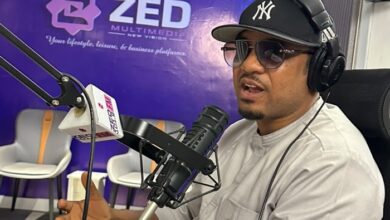
Nana Sloppy Recalls Early Guitar Influence

By Esther Korantemaa Offei
Highlife legend Nana Sloppy Mike Gyamfi has opened up about his early journey into music, revealing how family influence and a chance encounter with a talented schoolmate shaped his path into becoming a celebrated musician.
Speaking in an interview on “Highlife Conversations” on Zed FM, Gyamfi recounted that although he grew up surrounded by music, he only later came to fully appreciate the depth of his family’s musical background.
“Naturally, my family is full of musicians. A few of my nephews are playing, and my uncle had a band,” he said. “It was later I realized that the family… were very musically oriented.”
Gyamfi traced his formative years to the West African Secondary School, where his interest in music began to take shape. It was during this time that he met a fellow student, Musa, whose exceptional guitar skills left a lasting impression on him.
“I think Musa was in the same class with me. He was a very good guitarist. He brought a guitar to school,” Gyamfi recalled.
According to him, Musa’s ability to skillfully play popular tunes, including songs by internationally acclaimed artistes, sparked his curiosity and admiration.
“There’s this song by Paul Simon, he played it very, very well. That attracted me. It was the sound of the strings. It made such a nice sound to listen to,” he said.
Gyamfi explained that Musa not only inspired him but also played a direct role in introducing him to the guitar. Living in the same dormitory made it easier for the two to interact, and Musa eventually offered to teach him.
“He told me, ‘Look, it’s not as difficult as you think. It’s the same thing we learn in class,’” Gyamfi said. “So he explained it and taught me how the notes were represented on a guitar.”
Through this guidance, Gyamfi began to understand musical scales and develop his skills, marking the beginning of his lifelong passion for music.
Despite studying music in school, he noted that many students at the time did not take the subject seriously. He attributed this partly to the nature of the curriculum, which focused heavily on Western classical traditions rather than African musical forms.
“We did the rudiments of music at school, but most of us didn’t take it seriously,” he said. “It’s really strange, maybe there wasn’t so much attention for what we did as Africans.”
He expressed concern that students were taught extensively about Western composers such as Beethoven, with little emphasis on developing and appreciating indigenous music.
“We were taught everything about Western music… instead of teaching us how we had to play it for ourselves,” Gyamfi added.
His reflections highlight broader concerns about music education in Africa and the need to preserve and promote local musical heritage.