

Tomato Production Plan Sparks Debate Amongst Ghanaians
By Esther Korantemaa Offei
The Vice President, Naana Jane Opoku-Agyemang, has reaffirmed government’s commitment to reducing Ghana’s reliance on imported tomatoes through expanded local production and agro-processing initiatives. The move forms part of broader efforts to strengthen food security, support smallholder farmers and create sustainable jobs across the agricultural value chain.
During recent discussions with international food company GB Foods in Barcelona, the Vice President highlighted the importance of inclusive agricultural growth that directly benefits rural communities. She noted that strengthening local production systems would not only stabilize supply but also reduce the country’s exposure to external shocks, such as export restrictions from neighbouring countries.
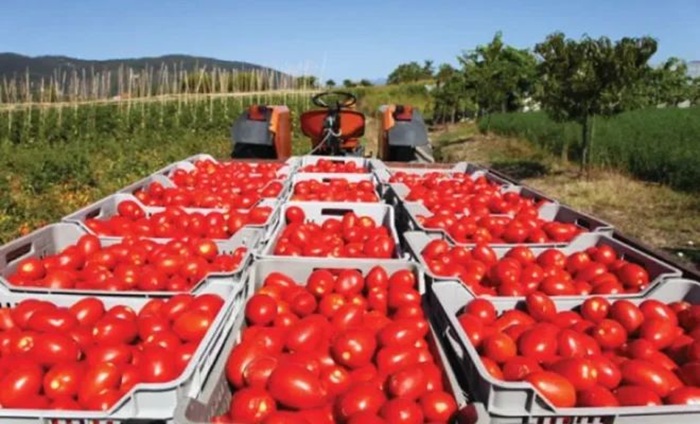
As part of the initiative, GB Foods has secured 6,000 hectares of land in the Afram Plains to cultivate tomatoes using modern farming technologies. The project is expected to significantly increase yields, ensure a steady supply of raw materials for processing and position Ghana to export processed tomato products in the long term. Government officials believe the partnership will help address recurring shortages and price volatility, particularly following recent supply disruptions from Burkina Faso.
However, reactions from the public reveal a mix of optimism and caution regarding the initiative. Speaking to the New Finder, a diverse group of citizens shared their views on what measures should accompany the policy to ensure its success.
One respondent expressed strong support for the initiative, emphasizing its potential benefits across the value chain. “With the plantation of tomatoes and cultivating here in Ghana, it is going to help farmers a lot and reduce the burden on traders who travel outside the country to source produce,” the respondent said. “It will also keep farmers actively engaged and make tomatoes cheaper and more available on the market. I think it is a very good initiative.”
Another citizen welcomed the government’s engagement with international partners but called for a more balanced approach that includes local businesses. “I think the Vice President’s negotiations are a good step for the country and for local producers,” the respondent noted. “However, there should be more collaboration with local companies to help them expand production. Government should also invest in storage facilities because farmers often have surplus produce during the season but lack places to store them.”
The respondent further stressed the need for improved infrastructure, adding that “without proper storage, including cold rooms and processing centres, a lot of produce goes to waste. Government must also invest in irrigation systems so farmers can produce tomatoes all year round instead of relying only on seasonal farming.”
A third respondent highlighted the broader economic implications of the policy, pointing out both its potential and its risks. “The plan has real potential, but whether tomatoes become cheaper and more available depends on how well it is implemented,” the individual explained. “Ghana currently relies heavily on imports, which exposes prices to external shocks like border closures. Increasing local production could reduce shortages, but initial production costs may remain high.”
The respondent also drew attention to post-harvest challenges. “Tomatoes spoil quickly, so if storage and processing systems are not improved alongside production, the expected benefits may not be fully realised. Surpluses could still lead to losses rather than lower prices for consumers,” the person added.
Conversely, another citizen expressed cautious optimism, stating that increased local production could bring long-term benefits if managed effectively. “Producing more tomatoes locally should make them more available and possibly cheaper, especially during shortages,” the respondent said. “But it depends on how well the system is managed and whether companies work closely with local farmers.”
The respondent also raised concerns about inclusivity, warning that “there is always the risk that large companies may dominate the sector, leaving smallholder farmers with limited benefits. It is important that policies ensure fair participation and support for smaller producers.”
The varied responses highlight key issues that experts say must be addressed to ensure the success of the initiative. These include investment in storage infrastructure, improved irrigation systems, stronger collaboration between public and private sectors, and targeted support for smallholder farmers.
While the government’s renewed focus on local tomato production has been widely welcomed as a step in the right direction, many observers agree that its long-term impact will depend largely on effective implementation. For now, the policy has sparked an important national conversation about food security, agricultural transformation and the future of Ghana’s farming sector.



