

Transparency International Kenya Highlights Challenges in Fight Against Corruption
By Lois Amanor
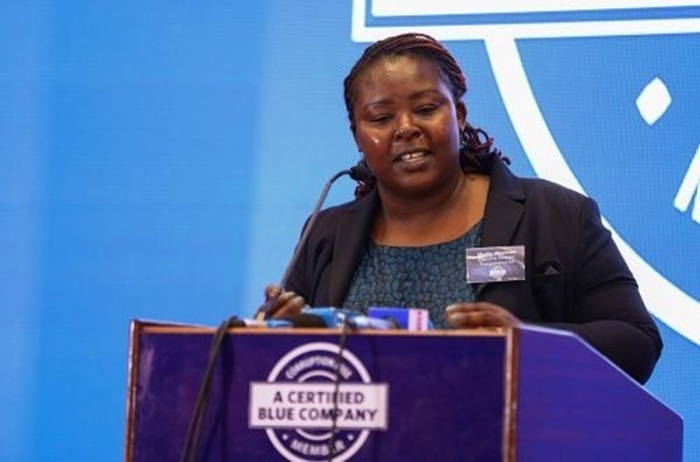
The Executive Director of Transparency International Kenya, Mrs. Sheila Masinde outlined the difficulties her country faces in tackling corruption.
Corruption remains one of Africa’s biggest obstacles to development, weakening institutions and eroding public trust. Across the continent, governments and civil society continue to struggle with accountability and the protection of public resources.
Speaking at the national dialogue on the Office of the Special Prosecutor in Ghana, She explained that Kenya’s system involves several agencies: the Ethics and Anti Corruption Commission, the police under the Directorate of Criminal Investigations, and the Office of the Director of Public Prosecutions. While separating mandates is meant to ensure accountability, she said overlapping roles often create confusion and conflict.
Masinde noted that the Ethics and Anti Corruption Commission sometimes clashes with the Directorate of Criminal Investigations over who should handle certain cases. In some instances, both agencies investigate the same matter, creating duplication. According to her, the political class often exploits this lack of clarity, influencing weaker investigations to be withdrawn.
She pointed out that many corruption cases involving politically connected individuals have been dropped, only for those same people to later contest or be appointed to public office. Civil society groups, led by Transparency International, have gone to court to challenge decisions by the Director of Public Prosecutions to withdraw cases. In some trials, judges said they were forced to acquit suspects because prosecutors appeared to defend them rather than pursue convictions. Transparency International has even sued prosecutors individually to hold them accountable, stressing that taxpayers often bear the cost when acquitted individuals later claim compensation.
Masinde acknowledged that Ghana is performing better than Kenya on the global corruption perception index, with Ghana scoring 43 compared to Kenya’s 30. She said Kenya has a strong legal and constitutional framework but struggles with implementation.
She praised the Ethics and Anti Corruption Commission for its efforts despite limited staff, technical capacity, and financial resources. The commission has built partnerships with international bodies such as the United Nations Office on Drugs and Crime, the UK’s Serious Fraud Office, and the U.S. FBI to strengthen investigations.
Still, Masinde admitted that resource constraints force the commission to prioritise high value cases, leaving many complaints unresolved. She concluded that while Kenya has made progress, political influence and weak implementation remain major obstacles in the fight against corruption.



