Tourism Professor Advocates Community-Based Tourism

By: Solomon Nartey Tetteh
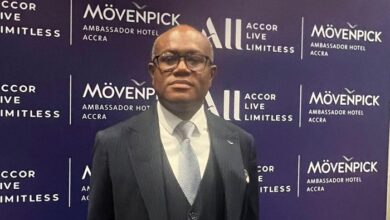
Professor of Tourism and Marketing Management, Gabriel Eshun, has called for a renewed focus on community-based tourism and improved service delivery to drive sustainable growth in Ghana’s tourism sector.
Speaking on Business Breakfast on ZED 101.9FM, Prof. Eshun emphasised that involving local communities more directly in tourism development would significantly enhance the country’s economic benefits.
According to him, tourism policies must go beyond catering to high-end visitors and instead prioritise inclusivity by empowering communities at the grassroots level. He noted that domestic tourism is deeply rooted in community-based initiatives, which can help spread the benefits of the sector more equitably across the country.
“The more communities are involved in tourism, the more the country benefits,” he stated, urging stakeholders to ensure that tourism development reflects the needs and participation of local populations.
Prof. Eshun also underscored the importance of introducing a national service excellence certification to raise standards across the industry. He called on the Ministry of Tourism, the Ghana Tourism Authority, and other stakeholders to collaborate on a proactive strategy aimed at enhancing service delivery.
He explained that Ghana must strive to create what he described as a “PEARL experience” defined by professionalism, excellence, astuteness, responsiveness, and leadership to remain competitive in the global tourism market.
In addition, he highlighted the critical role of customer satisfaction in tourism marketing.
Prof. Eshun warned that dissatisfied customers often share negative experiences widely, potentially discouraging future visitors.
He noted that satisfied tourists can become powerful brand ambassadors for the country, promoting Ghana through word-of-mouth at no additional cost.
“When customers are happy, they become your marketing champions,” he said.
Prof. Eshun stressed that strengthening community participation alongside improved service standards would position Ghana as a more attractive and competitive tourism destination while ensuring inclusive and sustainable growth for the sector.
The tourism expert also called for deeper and more honest conversations about Africa’s position in the global economic and political order, questioning whether current international systems truly serve the continent’s development.
Prof. Eshun raised critical concerns about Africa’s representation and influence in key global institutions, including the United Nations Security Council, International Monetary Fund, and the World Bank.
He questioned whether these institutions are genuinely structured to support Africa’s long-term growth and sovereignty.
“Is Africa on the UN Security Council? What is the main job of the IMF and World Bank when it comes to true African development?” he asked.
Prof. Eshun further pointed to emerging geopolitical tensions, citing South Africa’s involvement in BRICS as an example of the challenges African countries face when asserting independence on the global stage.
According to him, Africa’s pursuit of dignity, liberty, and prosperity is often met with systemic obstacles that undermine its sovereignty. He noted that despite being an integral part of the global community and historically central to human civilization, the continent continues to be marginalised in economic benefits.
Prof. Eshun stressed the need for a renewed sense of identity and confidence among Africans, rejecting the narratives that portray the continent as perpetually underdeveloped, noting that Africa has long played a foundational role in global progress.
Prof. Eshun also criticised the structure of global trade, particularly in the export of raw materials.
“We cannot continue to produce cocoa for decades and receive only a marginal benefit that does not transform our economies,” he stated.
He further highlighted what he described as an imbalance in global economic relations, where Africa contributes significantly to sustaining the world yet remains labelled as poor.
Prof. Eshun urged African leaders, policymakers, and citizens to rethink the continent’s engagement with the global system and push for structures that prioritise equitable growth and self-determined development.