Burkina Faso Tomato Export Ban a Wake-Up Call – BoG Governor
By Nii Trebi Hammond
The Governor of the Bank of Ghana, Dr. Johnson Pandit Asiama, has described Burkina Faso’s decision to ban the export of tomatoes to Ghana as a “wake-up call,” urging swift action to reduce the country’s dependence on commodity imports and build a more resilient economy.
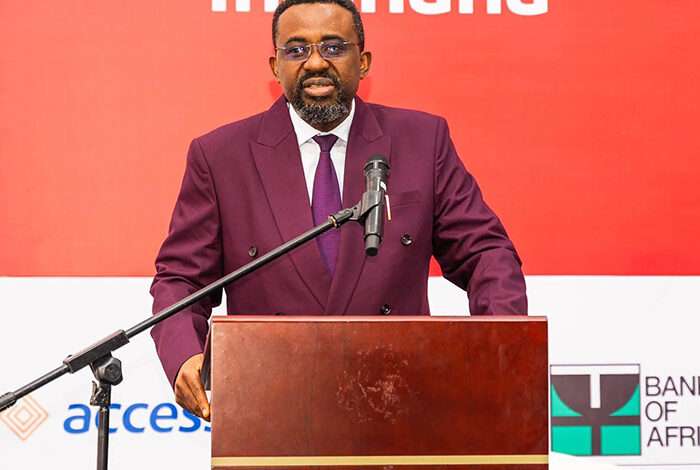
Speaking at an International Conference of the Ghana Exim Bank, Dr. Asiama said Ghana’s vulnerability as a small, open, commodity-exporting economy leaves it highly exposed to external shocks, including fluctuations in commodity prices and supply disruptions from neighboring countries.
According to him, the recent restriction on tomato exports from Burkina Faso underscores the urgent need for Ghana to strengthen local production capacity, particularly in agriculture. “The Burkina issue is actually a wake-up call,” he said, stressing that such developments should not escalate into crises for Ghana given its agricultural potential.
Dr. Asiama noted that although macroeconomic stability has improved over the past year, the country must now focus on addressing structural weaknesses, especially through diversification. He revealed that non-traditional exports currently account for only about 10 percent of Ghana’s export revenues, a situation he described as inadequate.
The Governor disclosed that the Bank of Ghana’s Monetary Policy Committee (MPC) has been engaging key stakeholders, including the Ministry of Food and Agriculture, to explore solutions. He indicated that discussions have already identified viable areas such as Agogo and other parts of the country where tomatoes can be cultivated successfully.
He further highlighted the opportunity to leverage Ghana’s large youth population to boost agricultural production. “We have about 500,000 young people looking for opportunities. We also have the financial resources. So what are we waiting for?” he questioned.
Dr. Asiama pointed out that crops like onions, which mature within three to four months, present quick-win opportunities for local farmers and could help reduce import dependence in the short term.
He also disclosed plans to establish a dedicated working group involving institutions such as the Ghana Exim Bank to drive practical interventions aimed at enhancing local production and export diversification.
The BoG Governor emphasized that Ghana must move beyond over-reliance on traditional commodities such as gold, oil, and cocoa, and instead invest in value addition and the expansion of non-traditional exports.
“The time to act is now,” he said, adding that Ghana must take deliberate steps to turn external shocks into opportunities for long-term economic transformation.