

Ghana Launches National Seed System Reset to Drive 24-Hour Economy
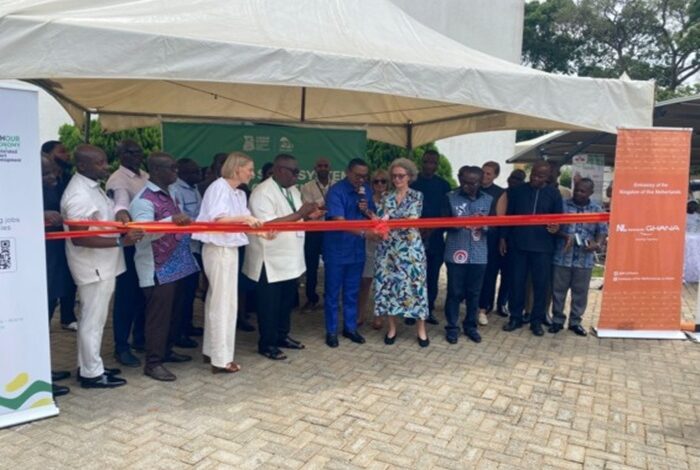
Ghana is taking a major step to transform its agriculture and drive the 24-hour economy with the launch of the National Seed System Reset Programme.
The initiative aims to create a modern, coordinated seed delivery network to ensure farmers across the country have reliable access to high-quality, improved seed varieties, which is vital for expanding irrigated farming, increasing productivity and strengthening national food security.
The two-day programme, held at the West Africa Centre for Crop Improvement (WACCI) at the University of Ghana, Legon, brought together policymakers, agricultural experts, seed producers, development partners, and other stakeholders to discuss strategies for strengthening the country’s seed system as part of its broader agricultural transformation agenda.
Organised by the 24-Hour Economy Authority in partnership with the Embassy of the Kingdom of the Netherlands in Ghana and the Ghana Seed Partnership, the initiative seeks to establish a modern, efficient pipeline to ensure farmers have timely access to improved seed varieties. Dr. Charles T. Nornoo, Head of Sector Strategy and Integration at the 24-Hour Economy Authority, emphasised that a dependable seed delivery system is essential for the government’s plans to expand irrigated farming along the Volta Basin.
The aim is to cultivate up to two million hectares of farmland using the Volta Economic Corridor, providing infrastructure, irrigation, and transport networks to facilitate production and market access.
Dr. Nornoo noted that seed availability is a critical factor for large-scale irrigation and multiple cropping cycles. While Ghana has strong research capacity and sufficient planting materials, the challenge lies in ensuring that improved seeds reach farmers effectively.
The programme is intended to build a robust delivery pipeline connecting research institutions, seed multipliers, certification bodies, government agencies, and farmer organisations, culminating in the formation of a task team responsible for implementing decisions and ensuring effective rollout.
He acknowledged the support of development partners, including the British Foreign, Commonwealth and Development Office, the Dutch Embassy and the J.E.T. Project, for laying the groundwork for Ghana’s seed system reforms.
Goosie Tanoh, Presidential Advisor on the 24-Hour Economy initiative, described the programme as central to the government’s 24H+ vision, highlighting that a modern seed system functions as key economic infrastructure.
Participants toured WACCI laboratories, early-generation seed facilities, certification labs, and the Horticulture Innovation Hub, observing the scientific and institutional foundations already in place. He stressed that Ghana’s challenge is not technical capability but coordination, clear institutional architecture, and effective execution, noting that private and public capacity already exists.
Tanoh outlined priority targets for 2026, including activating 200,000 jobs across priority sectors, integrating 500 SMEs into structured finance and industrial park ecosystems, mobilising over GH¢10 billion in capital, operationalising the Volta Economic Corridor with agro-ecological, aquaculture, and industrial parks, and establishing three cooperative-owned production and processing enterprises. Achieving these goals, he said, depends on reliable access to quality seed combined with anchor demand, financing, and logistics.
He also stressed the importance of protecting intellectual property to encourage innovation, ensuring plant breeders, research institutions, and private seed companies have enforceable licensing agreements and clear legal frameworks governing plant breeders’ rights.
Terri Sarch, Development Director at the British High Commission in Ghana, commended Ghana’s agricultural progress over the past two decades, noting that yields for crops such as maize have doubled due to the adoption of improved seed varieties.
She emphasised that certified seed adoption must increase to sustain productivity and adapt to climate change, highlighting the need for early-maturing and drought-resistant varieties. She further stressed that agricultural progress is achieved through collaboration among farmers, researchers, policymakers, innovators, and development partners like the UK and the Netherlands.
Tanoh urged participants to move from discussion to practical action, highlighting the formation of a Seed Systems Task Team with a 60-day mandate to develop a detailed implementation roadmap. Early-generation seed plans, regulatory reforms, and pilot delivery models for maize and rice are expected within 90 days. He concluded by saying the focus must now shift to designing a seed system that supports agro-parks, cooperatives, exporters, and urban consumers in the 24-hour economy.
The programme also featured exhibitions from public and private organisations, including the Council for Scientific and Industrial Research, the National Seed Trade Association of Ghana, the Ghana Atomic Energy Commission, the government’s Feed Ghana Programme, Legacy Crop Improvement Centre, Integrated Water and Agricultural Development (Ghana) Limited, the Beela Project in partnership with TRAX, and the Ghana–Netherlands Seed Partnership, showcasing Ghana’s current scientific and institutional capabilities in seed research, production, certification, and distribution.



