

Ghana Must Strengthen Local Leadership in Disease Control – GHS Director-General
By Maame Efua Kwaduah
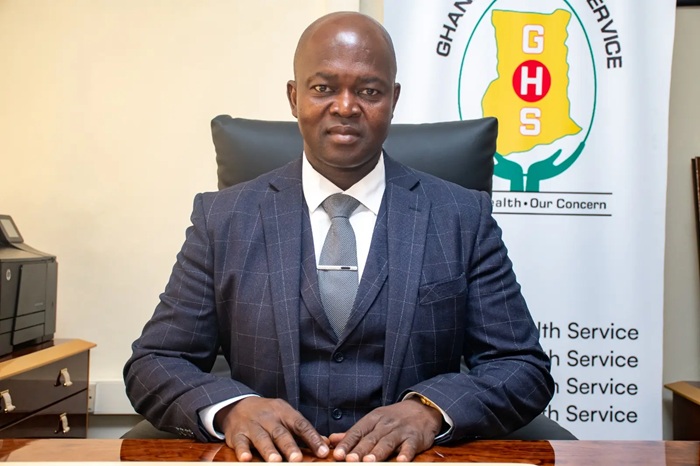
The Director-General of the Ghana Health Service, Dr. Samuel Kaba Akoriyea, has called for sustained efforts to strengthen Ghana’s fight against HIV/AIDS, tuberculosis and malaria.
He emphasized that integrated, data-driven approaches and strong local leadership are essential to achieve lasting impact.
Dr. Akoriyea made the remarks at the annual performance review meeting of the National AIDS and STI Control Programme, the National Tuberculosis Control Programme and the National Malaria Control Programme.
He said Ghana’s health system is at a critical moment, noting that past outbreaks of cholera, measles and other diseases have demonstrated that illnesses do not occur in isolation and responses should not be fragmented.
“People living with HIV are particularly vulnerable during outbreaks. Malaria continues to put pressure on households and health facilities at the same time. If diseases are interconnected, our responses must also be interconnected. Integration is not just an administrative reform. It is a clinical necessity, a public health imperative and a financial requirement,” he said.
Dr. Akoriyea acknowledged the government’s strong commitment to the health sector, noting that it continues to receive one of the largest allocations in the national budget. However, he stressed that the efficient and innovative use of available resources is crucial.
“Global financial support is changing rapidly and Ghana can no longer rely solely on external funding. We must ensure sustainability through strong leadership, accountability and innovative domestic solutions,” he emphasized.
He noted that one of the major challenges facing the country’s disease control programmes is the decline in donor funding, which could affect the continuity and reach of essential health services.
According to him, patients do not experience healthcare challenges according to programme structures, therefore integrated approaches across HIV, tuberculosis and malaria services are not only administrative decisions but also essential clinical and public health imperatives.
Dr. Akoriyea also stressed that programme performance must be owned at every level of the health system, from national directors to district health managers.
“Ownership means closely monitoring programme data, supervising personnel effectively and ensuring that resources translate into measurable outcomes. National programmes will continue to provide policy guidance, but real performance depends on leadership and commitment at the regional and district levels,” he noted.
He urged regional and district directors to work closely with local authorities, including metropolitan, municipal and district assemblies, to mobilize domestic resources to support malaria elimination and other public health interventions.
Dr. Akoriyea added that investments in TB, HIV and malaria programmes should also be used to strengthen the broader health system, including clinical services, laboratories, supply chains, surveillance systems, workforce capacity and community health platforms.
“Every patient seen at a facility, every community health worker reaching distant populations and every nurse or programme officer striving to improve data quality contributes to the strength of our health system. Eliminating TB, HIV and malaria-related deaths is achievable if we plan with evidence, lead with integrity and execute with discipline,” he said.
He also acknowledged the important contributions of development partners, civil society organisations, NGOs, faith-based institutions and private sector providers, particularly the Christian Health Association of Ghana, in supporting healthcare delivery across the country.
Dr. Akoriyea called for clear regional action plans, improved data quality and stronger domestic resource mobilisation to ensure the sustainability of the programmes.
He further urged stakeholders to move away from siloed programme implementation and instead work as a unified health system.
“Let this meeting mark the shift from programmes working alongside one another to programmes working together for the benefit of all Ghanaians. Let us choose discipline over optics and impact over appearances,” he said.



