

Malawi Requests Ghana’s Support to Expand Digital Innovation
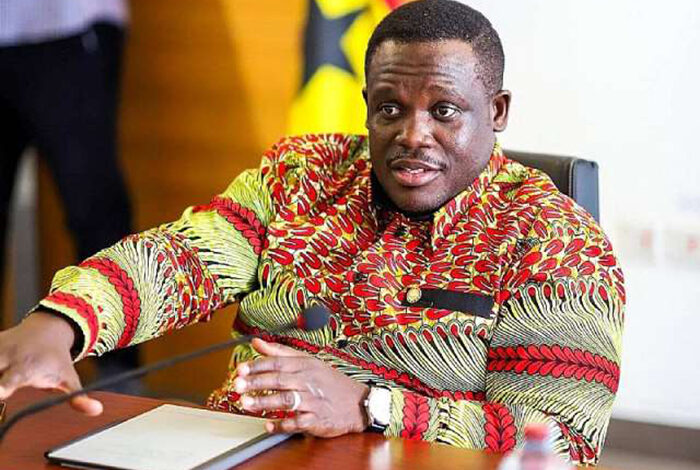
The Minister for Communications, Digital Technology and Innovations, Samuel Nartey George, has disclosed that the Malawian government has invited Ghana into a bilateral partnership aimed at replicating Ghana’s success in digital innovation and technology development.
The request was made by Shadric Namalomba during a meeting with the minister at the ongoing Mobile World Congress 2026 in Barcelona.
According to him, the proposal reflects the growing recognition of Ghana’s strong reputation in digital transformation across the African continent.
He revealed that during a recent state visit to Zambia with John Dramani Mahama, he travelled with 12 Ghanaian technology and fintech companies, which within three days secured business agreements worth about US$60 million.
According to him, the outcome of the visit demonstrates the confidence other African countries have in Ghana’s digital innovation ecosystem and their interest in learning from the country’s experience.
Mr George said that following the engagement in Zambia, the Malawian minister approached him with a request for Ghana’s assistance in implementing a wide range of digital innovation initiatives in the coming years.
He noted that Malawi is particularly interested in Ghana’s expertise in areas such as fintech, digital identification systems, last-mile internet connectivity, rural energy solutions for connectivity, e-government platforms, smart workplace systems, agritech, edutech, healthtech and artificial intelligence-driven technologies.
“In fact, my colleague from Malawi indicated that his success as a minister largely depends on how effectively we are able to mobilise Ghanaian technology companies to deploy their solutions in Malawi,” he said.
Mr George added that Ghana has also been invited to participate in Malawi’s upcoming digital innovation week, where Ghanaian technology entrepreneurs will engage their counterparts in Malawi to explore partnerships aimed at replicating Ghana’s digital progress.
He explained that the request aligns with his broader vision of exporting Ghanaian technology solutions across Africa. According to him, the decision to begin engagement with Zambia was strategic because the country shares borders with eight other nations, including Malawi, making it a suitable regional hub for technological expansion.
“As a starting point, I will share copies of Ghana’s revised digital legislation with them so they can benchmark and refine their own policies. I will also provide them with our national AI strategy to support their development efforts,” he stated.
The minister revealed that he intends to lead a delegation of between 15 and 20 Ghanaian technology firms to Malawi to support initiatives including national identification systems, fintech platforms and digital government services.
Mr George said expanding Ghanaian technology businesses across the continent reflects the vision of Kwame Nkrumah, who believed Ghana’s independence should contribute to the broader liberation and progress of Africa.
He also expressed optimism that policymakers across the continent are increasingly recognising the importance of collaboration among African countries rather than depending solely on foreign technology giants.
According to him, African entrepreneurs often possess a deeper understanding of local conditions and social contexts than companies operating from outside the continent.
He added that one Ghanaian firm, Bahamus, is already undertaking work in Malawi by providing broadcast monitoring technology, while a Malawian delegation is expected to visit Ghana to study the country’s administrative and technological systems.
Mr George further explained that beyond Malawi, Ghana aims to encourage regulators and policymakers across Africa to benchmark their regulatory frameworks against Ghana’s in order to promote regulatory alignment.
Such harmonisation, he said, could support the introduction of licence passporting, a system that would allow financial technology companies authorised in one country to operate across multiple African markets without obtaining separate licences.
The minister noted that Zambia’s financial regulatory system already draws heavily from the framework of the Bank of Ghana, making it easier for Ghanaian payment service providers to expand operations there and potentially into neighbouring countries such as Malawi.
He emphasised that regulatory cooperation among African governments is essential for strengthening intra-continental trade and enabling businesses to operate more easily across borders.
Mr George said Ghana recently published new draft legislation for the digital and technology industry partly to allow other African countries to study and adapt the regulatory models where appropriate.
He expressed confidence that with policymakers driving regulatory harmonisation, African nations could eventually conduct trade, digital transactions and financial settlements directly among themselves without relying on dollar-based settlement systems outside the continent.
According to him, such progress would represent a significant step toward strengthening Africa’s economic sovereignty and technological independence.



