Ghana Petroleum Hub Poised to Drive Economic Transformation –CEO
By Maame Efua Kwaduah
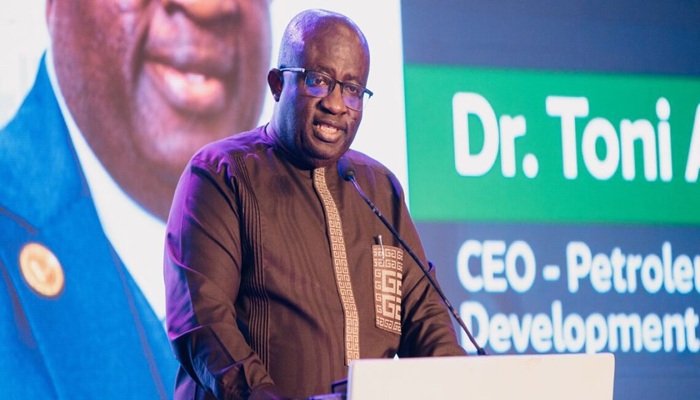
The Chief Executive Officer of the Petroleum Hub Development Corporation (PHDC), Dr. Toni Aubynn, has reiterated government’s commitment to developing the Ghana Petroleum Hub.
Delivering his opening remarks at a strategic engagement with Civil Society Organisations (CSOs) Dr Aubynn , explained that the project is designed to position Ghana as a major energy security corridor in the region while ensuring sustainable benefits for local communities.
The meeting, held under the theme “Advancing Ghana’s Energy Future through Dialogue, Accountability and Collaboration,” sought to deepen stakeholder understanding and promote participatory governance around the flagship initiative. Dr. Aubynn emphasised that no significant national infrastructure project can succeed without transparency, public trust and continuous engagement with citizens.
He noted that the Ghana Petroleum Hub aims to reposition the country as a strategic energy and logistics centre within West Africa and beyond. The initiative involves the development of large-scale infrastructure, including refineries, storage facilities and petrochemical plants, to enhance value addition in Ghana’s petroleum sector.
Describing it as one of the most ambitious industrial undertakings in the country’s recent history, Dr. Aubynn said the integrated complex, located in the Western Region, will combine refining, storage and petrochemical operations in a coordinated system capable of serving both domestic and international markets. By strengthening local refining capacity and downstream industries, the project is expected to reduce dependence on imported refined products while increasing export potential.
A major component of the Petroleum Hub project is its anticipated impact on employment and investment. Dr. Aubynn indicated that projections estimate up to 700,000 jobs across various phases of development and operation, covering construction, engineering, logistics, services and related sectors. He added that the first phase of the project has already been completed, marking a significant milestone in the implementation process.
Beyond direct job creation, the initiative is expected to stimulate small and medium-sized enterprises, strengthen local supply chains and expand skills development opportunities for Ghanaian youth.
Although the project is largely economic in scope, Dr. Aubynn stressed that social inclusion remains a core principle. He stated that the Petroleum Hub is intended to be both economically viable and socially responsible, ensuring that host communities and vulnerable groups benefit from its implementation.
He acknowledged the critical role of Civil Society Organisations in promoting accountability and improving development outcomes, noting that their input and oversight contribute to stronger governance and responsive planning. The engagement, he said, was not merely a formality but a deliberate effort to foster openness and collaborative decision-making around the project.
Dr. Aubynn further assured stakeholders that the Ghana Petroleum Hub will comply with international environmental and social standards, particularly in governance, transparency and community engagement. He maintained that strict regulatory adherence and responsible environmental management are essential to boosting investor confidence and enhancing the project’s global credibility.
He encouraged participants to provide constructive feedback and remain actively involved throughout the project’s lifecycle, explaining that stakeholder input would help refine planning and address concerns as implementation progresses.
Looking ahead, Dr. Aubynn expressed optimism that the Ghana Petroleum Hub will deliver long-term economic benefits. He described the initiative as a strategic national investment aimed at diversifying revenue streams, strengthening energy security and promoting inclusive development.