Trade Ministry, UNIDO Push Circular Textile Plan to Draw Investment
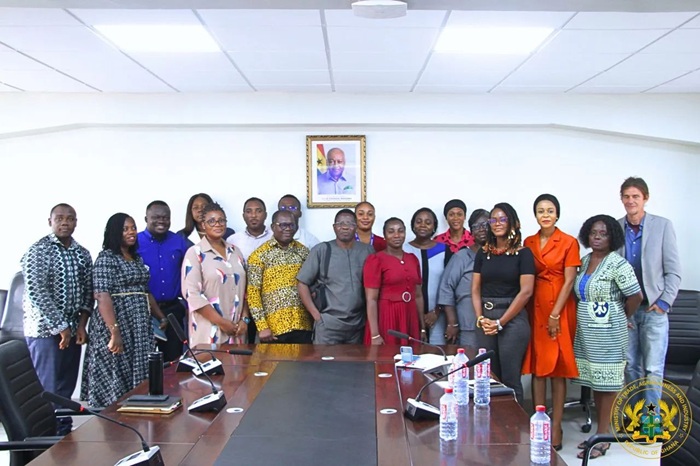
The United Nations Industrial Development Organization (UNIDO) has opened discussions with Ghana’s Trade Ministry to advance plans for a circular textile industry, with a focus on recycling infrastructure, SME support and technology transfer from Italy.
The talks, held in Accra with the Garment and Textiles Unit of the Ministry of Trade, Agribusiness and Industry, centered on restructuring Ghana’s textile value chain around circular economy principles to attract investment and reduce environmental impact.
Closed-Loop Recycling Facility Under Study
A major highlight of the engagement was the proposal to conduct feasibility studies toward establishing a closed-loop textile recycling facility in Ghana. The proposed plant would convert discarded fabrics into reusable industrial inputs, reducing textile waste while lowering reliance on imported raw materials.
Officials say the initiative aims to transform waste into value, positioning Ghana as a hub for sustainable textile manufacturing in West Africa.
SME Support and Capacity Building
Beyond infrastructure, the partnership seeks to strengthen small and medium-sized enterprises (SMEs) operating within the textile and garment sector. Plans include providing access to modern technical equipment, specialized training, and targeted capacity-building programmes to improve competitiveness and productivity.
Participants also discussed enhancing collaboration between industry players and local research institutions to drive innovation in sustainable production methods.
Italian Technology Transfer and Investment Promotion
A key component of the discussions involved deepening cooperation with Italian partners to facilitate technology transfer and attract foreign direct investment into Ghana’s textile sector. Italian and broader European technologies were identified as potential solutions to modernize production processes and support circular manufacturing models.
Structured business missions and investment promotion initiatives are expected to play a role in accelerating the introduction of advanced recycling and sustainable textile technologies.
Driving Industrial Transformation
Officials say the initiative aligns with Ghana’s broader industrial transformation agenda, which prioritizes resilient and environmentally sustainable manufacturing.
By embedding circular economy principles into textile production, the government and its partners hope to unlock new revenue streams, create jobs across the value chain, and enhance export competitiveness.
The collaboration with UNIDO signals growing international support for Ghana’s green industrial ambitions, with policymakers optimistic that a well-structured circular textile ecosystem could attract significant investment while addressing environmental challenges linked to textile waste.