

Asia Markets Drop as U.S.–Iran Tensions Fuel Oil Spike
Oil prices soared and Asian stock markets fell on Monday following U.S. and Israeli strikes on Iran that have disrupted shipping in the Gulf and heightened fears of a wider conflict.
Brent crude, the international benchmark, jumped to just over $80 a barrel in early Asian trading, compared with Friday’s close of $72.87. Prices later eased slightly to below $79, but analysts warned they could climb further if the turmoil continues. Gold, a traditional safe haven investment, rose two percent.
The strikes, which killed Iran’s Supreme Leader Ayatollah Ali Khamenei on Saturday, have rattled global markets. Japan’s Nikkei index dropped 2.2 percent in early trade, while Sydney’s market fell 0.5 percent.
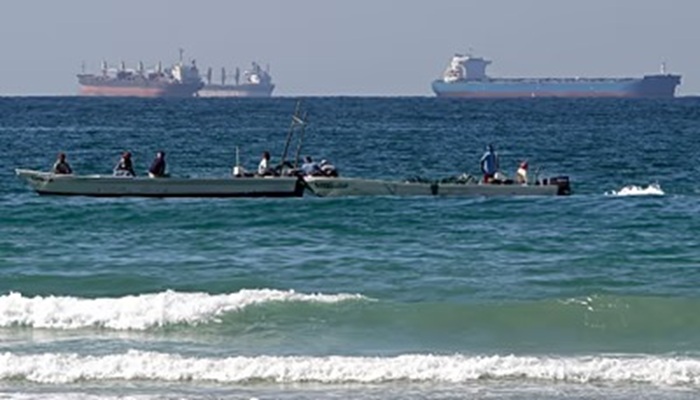
Iran has retaliated with missile and drone attacks across the Gulf, killing four people and injuring dozens, according to the UAE foreign ministry. While Iran has not formally closed the Strait of Hormuz, a vital waterway through which about 20 percent of global seaborne oil passes, its Revolutionary Guards have warned against transit. On Sunday, at least two ships were hit, one off Oman’s coast and another near the UAE, according to the UK Maritime Trade Operations agency. Iranian state television reported that an oil tanker was sinking after attempting to “illegally” pass through the strait.
The threat to shipping has already forced major companies to suspend passage through the route. Analysts say insurance costs are rising sharply, and prices could reach $90 a barrel if the disruption continues. “No matter how much spare capacity is available in reserves, it cannot fill that gap. That gap is just too big,” said Amena Bakr, head of Middle East and OPEC+ research at Kpler.
Jorge Leon of Rystad Energy estimated that closure of the strait could remove 8 to 10 million barrels per day from global supply. While oil importing countries hold reserves, OECD members are required to maintain 90 days of stocks, prices above $100 cannot be ruled out.
Some analysts believe Iran may deliberately push prices higher to pressure U.S. President Donald Trump, who has promised Americans low fuel costs. “High oil prices are the Achilles heel of Trump,” said Michelle Brouhard of Kpler, noting that the U.S. is heading into mid term elections later this year.
Gas prices are also expected to rise, as Qatar is a major exporter of liquefied natural gas. Economists warn that higher energy costs could fuel inflation and hurt growth. “If it lasts only a few days, it is not serious. But if prolonged, it will have a recessionary effect,” said Eric Dor of the IESEG School of Management in Paris.
As markets react, investors are bracing for further volatility. Defence stocks may benefit, but sectors such as air transport, shipping, and tourism are expected to suffer heavy losses.



