

Interior Ministry Receives Final Report on Gbinyiri Peace Mediation
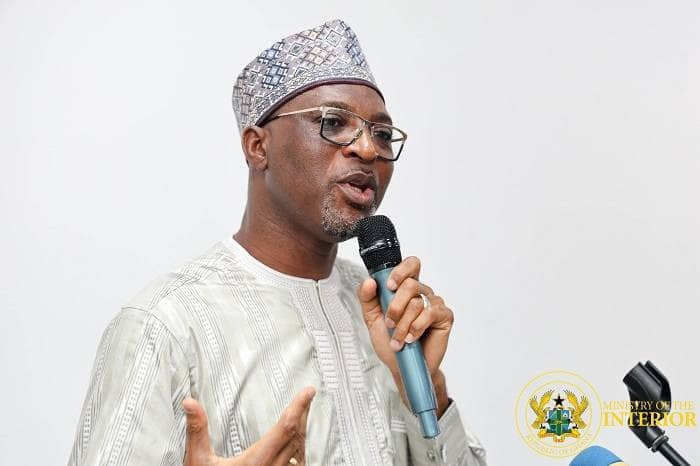
The Minister for the Interior, Muntaka Mohammed-Mubarak, has officially received the concluding report from the Gbenyiri Mediation Committee, which was tasked with resolving inter-communal tensions between the Lobi/Birifor and Gonja communities in the Savannah Region.
Established in September 2025, the Committee was mandated to foster dialogue, cooperation, and peaceful coexistence following renewed clashes in parts of the Sawla-Tuna-Kalba area. The report is expected to provide a detailed framework for rebuilding trust, promoting tolerance, and restoring lasting stability in the Gbinyiri community.
While receiving the report, Minister Muntaka commended the Committee for its diligence and commitment, emphasizing that the government would carefully review and implement its recommendations. He also expressed gratitude to development partners for their ongoing support and encouraged continued collaboration to strengthen social cohesion among the affected communities. The Minister particularly praised the Committee chairman, Emmanuel Bombande, and his team for their meticulous and persistent work toward ensuring lasting peace in the Sawla-Tuna-Kalba enclave.
In presenting the report, Mr. Bombande acknowledged the support of President John Dramani Mahama, the Interior Ministry, the Overlord of Gonja, and other stakeholders, noting that sustainable conflict resolution requires continuous engagement and sacrifices from all parties. He called on the government to prioritize the implementation of the recommendations, including establishing a clear roadmap and monitoring framework to translate proposals into tangible outcomes for lasting peace.
Background reports indicate that the Chief of Sawla, Iddrisu Abdulai Nugbanso, accused the Member of Parliament for Sawla-Tuna-Kalba, Andrew Chiwetey Dari, of worsening ethnic tensions between the Gonja and Birifor communities. According to local sources, Birifor militias allegedly responsible for attacks in Gbenyiri and Kalba—including the killing of four Gonja youth—were reportedly brought in from the Ivory Coast and armed with sophisticated weaponry.
The ensuing violence prompted Gonja warriors, known locally as Nbowuras, to launch counterattacks against the mercenaries and local Birifor youth. The conflict has resulted in hundreds of deaths, widespread displacement, and serious humanitarian concerns, with women and children disproportionately affected both locally and among those fleeing to the Ivory Coast, where reports of sexual abuse have emerged.



