Gov’t Spending Falls by 24% in 2025 — BoG
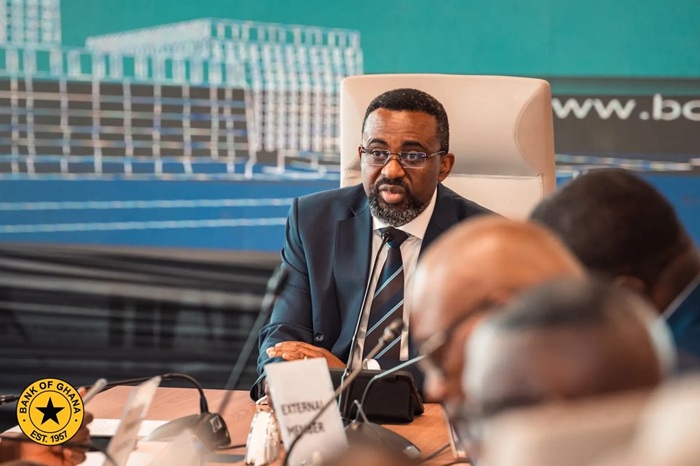
Government expenditure in 2025 came in significantly below target, with total spending recorded at GH¢194.36 billion, about 24% lower than the projected GH¢250.31 billion, according to the January 2026 Monetary Policy Report released by the Bank of Ghana.
The data points to a year marked by tighter fiscal controls and expenditure rationalisation, as authorities sought to consolidate gains from ongoing economic reforms and stabilisation efforts.
A breakdown of spending shows mixed performance across key expenditure lines.
Compensation of employees, which includes wages, salaries, pensions and gratuities, slightly exceeded its target. Government spent GH¢71.27 billion in this category, 1.8% above the programmed GH¢70.04 billion, representing a 16% year-on-year increase. Notably, compensation alone accounted for 38.2% of domestic revenue, underscoring persistent structural pressures from the public sector wage bill.
Spending on goods and services, however, reflected significant restraint. The government spent GH¢5.27 billion, 16.8% below the target of GH¢6.34 billion. Compared to the previous year’s GH¢38.44 billion, this marks a sharp 86.3% decline, suggesting aggressive cuts in discretionary expenditure.
Interest payments also came in below expectations at GH¢46.21 billion, compared to a target of GH¢57.87 billion. This was attributed to easing domestic interest rates and the appreciation of the Ghana cedi. Despite this moderation, interest payments still recorded a 5.8% increase from the GH¢43.68 billion reported in 2024.
Transfers and statutory payments to other government units exceeded projections. Grants, including allocations to the National Health Fund, GETFund, District Assemblies Common Fund and other earmarked funds, totalled GH¢50.81 billion, 3.7% above target and reflecting a 24.2% year-on-year increase.
Capital expenditure recorded one of the most significant shortfalls. Spending in this category stood at GH¢12.98 billion, far below the target of GH¢31.40 billion, representing a 58.7% undershoot. On a year-on-year basis, capital spending declined by 50.6%, raising concerns about the pace of infrastructure development and long-term growth investments.
Other expenditures also declined sharply, coming in at GH¢14.50 billion, 59.4% below the target of GH¢35.69 billion and lower than the GH¢24.77 billion recorded in 2024.
Overall, the expenditure outturn reflects a deliberate fiscal tightening strategy, driven by efforts to restore macroeconomic stability, reduce debt vulnerabilities and maintain investor confidence. However, the sharp contraction in capital spending highlights a potential trade-off between short-term fiscal discipline and long-term development priorities.