

Ghana’s Annual Tomato Imports Soar to GH¢760M
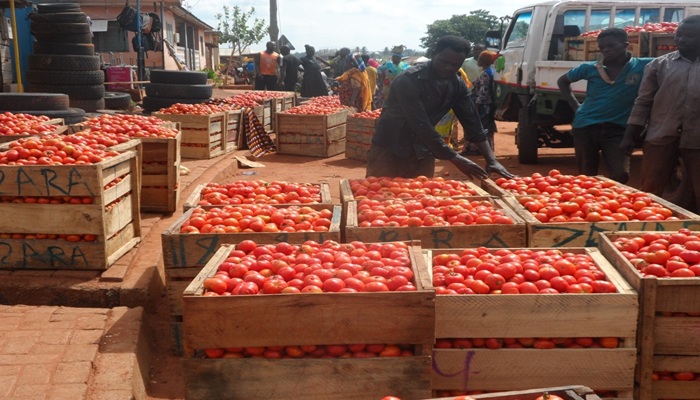
Ghana is spending an estimated GH¢760 million annually on tomato imports, according to a recent report commissioned by the Chamber of Agribusiness Ghana (CAG), highlighting what industry leaders describe as a deepening structural weakness in the country’s agricultural value chain.
The figure covers more than 75,000 tonnes of fresh tomato fruit imported each year, in addition to over 75,000 metric tonnes of tomato paste brands brought into the country. The report suggests that Ghana’s growing reliance on external supply continues to place significant pressure on foreign exchange reserves while undermining domestic production capacity.
Import dependency in the sector is not new. In 2022, the Vegetable Producers and Exporters Association of Ghana reported that tomato imports from neighbouring Burkina Faso alone reached GH¢400 million. However, CAG maintains that the broader economic implications now extend far beyond the headline import bill.
According to the Chamber, the total cost burden across the tomato trade value chain could rise to as much as GH¢5.7 billion annually when indirect losses are taken into account. These include foregone tax revenues, post-harvest losses, unrealised wages, and security-related costs borne by importers.
CAG estimates that approximately GH¢220 million is lost each year in uncollected income tax, VAT and corporate tax, largely because an estimated 250,000 potential jobs linked to a fully developed local tomato industry do not exist. The Chamber also calculates that some GH¢250 million worth of locally grown tomatoes, representing about 45 per cent of domestic output rot annually due to inadequate cold storage and weak post-harvest infrastructure.
Beyond production losses, the wage implications are substantial. The report projects that as much as GH¢4.5 billion in annual wages that could accrue to 250,000 Ghanaians is effectively forfeited because the country relies heavily on imported produce and processed paste rather than nurturing a robust domestic industry.
“These numbers are devastating,” said Anthony Morrison, CEO-CAG, who added: “We’re not just losing foreign exchange; we’re losing an entire generation’s employment opportunities”.
The Chamber further warned that recent security incidents in Burkina Faso underscore the vulnerability inherent in depending on external sources for a staple food commodity. It argues that Ghana possesses the agronomic potential to produce tomatoes competitively at home and should not continue to expose its economy and traders to avoidable risks.
Despite domestic farming activity, CAG notes that only about seven per cent of tomatoes processed locally originate from Ghanaian farms, with the majority consisting of imported bulk paste repackaged for sale. The Chamber attributes this imbalance to inconsistent local supply, quality concerns and the absence of a reliable cold chain.
“We have the technology and market demand, but not the consistent local supply. The CAG has a strategy: focus on production, quality and cold chain which will finally enable local processing of Ghanaian tomatoes, creating thousands of factory jobs.”
The proposed strategy, the Chamber states, would require an investment of GH¢3.2 billion over five years. However, it projects that the intervention could unlock economic returns exceeding GH¢5 billion by 2030, positioning the tomato sub-sector as a major contributor to employment, tax revenue and agro-industrial growth.
For policymakers and private investors alike, the report presents a clear message: without deliberate structural reform and capital injection, Ghana’s tomato market will remain a costly import-driven enterprise rather than a catalyst for domestic value creation.



