GNPC Reiterates Commitment to Responsible Saltpond Decommissioning
By: Maame Efua Kwaduah
The Ghana National Petroleum Corporation (GNPC) has reaffirmed its dedication to executing the Saltpond Decommissioning Project in line with regulatory standards, environmental safeguards and sustained community engagement.
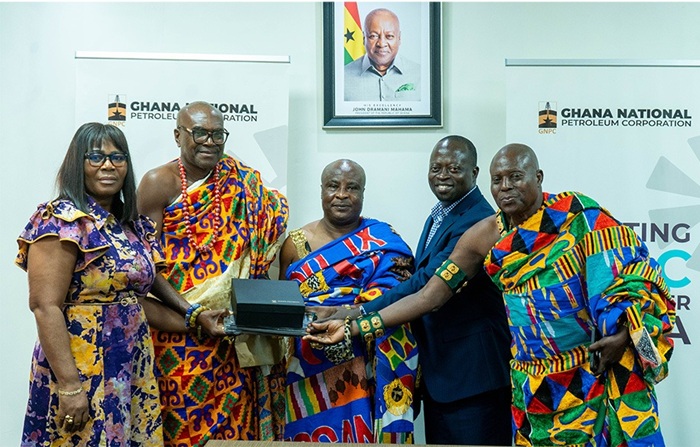
At a high-level meeting at Petroleum House with traditional authorities from the Nkusukum Traditional Area, GNPC management sought to address concerns surrounding the project while updating stakeholders on progress made so far.
The engagement underscored a broader reality within Ghana’s upstream petroleum sector: complex technical undertakings such as decommissioning require not only engineering expertise but also strong community trust and transparency. The discussions brought together GNPC executives and key traditional leaders, including Nana Okese Asandoh IX , Paramount Chief of Nkusukum Traditional Area, Nana Kwame Ntsiful, Chief of Ankaful and Nifahene of the Traditional Area and Nana Kwao Buko V, Chief of Biriwa and Ankobeahene of the Traditional Area.
Receiving the delegation on behalf of management, Deputy Chief Executive for Exploration and Production, Michael Aryeetey, stressed that ongoing dialogue with host communities remains fundamental to responsible petroleum operations. He explained that decommissioning involves intricate technical procedures governed by strict regulations.
According to him, GNPC is obliged to carry out the process with the highest safety standards, ensuring full compliance with environmental laws while protecting marine ecosystems and safeguarding the long-term welfare of nearby communities.
He emphasised that the Saltpond project continues to receive priority attention from the corporation. His remarks reflect the broader responsibility of national oil companies to balance regulatory compliance with environmental protection and community livelihoods.
With extractive industries facing increasing public scrutiny, the manner in which decommissioning projects are handled can significantly influence institutional credibility and investor confidence.
During the meeting, the Paramount Chief of the area, Nana Okese Asandoh IX, conveyed anxieties among fisherfolk regarding project delays and restricted access to sections of the facility due to safety requirements. For coastal communities reliant on fishing, such limitations carry direct economic consequences.
In response, Mr Aryeetey clarified that the project remains active and has not been discontinued. He attributed the perceived delays to contractual procedures and cost verification processes, including compulsory third-party technical reviews that must be completed before the next phase can commence.
He noted that although compliance checks and safety assessments may slow visible progress, they are necessary to ensure environmental integrity and financial accountability. GNPC, he added, continues to operate strictly within national regulatory frameworks and in accordance with international best practices.
Upon completion of the decommissioning exercise, comprehensive technical studies will determine sustainable post-project options, potentially including marine enhancement initiatives aimed at supporting biodiversity and reducing long-term ecological impact. For GNPC, the Saltpond undertaking represents both a statutory responsibility and a measure of its corporate reputation.
The meeting also provided an opportunity for management to brief traditional leaders on planned seismic data acquisition within the broader operational zone. These activities form part of GNPC’s upstream exploration agenda and could, subject to regulatory approvals and favourable results, lead to drilling and production. Early engagement with traditional authorities, management indicated, is intended to minimise misunderstandings and foster cooperation should exploration activities advance.
The chiefs pledged their support for GNPC’s initiatives and affirmed their readiness to collaborate peacefully within their jurisdiction. They also presented community development proposals, including assistance for constructing a Traditional Council Office and transport support under GNPC’s Corporate Social Investment programme.
Management acknowledged the requests and reiterated its commitment to structured development interventions aligned with sustainability goals and operational priorities.