

MoMo Powers Ghana’s Economy — But Who Protects the User?
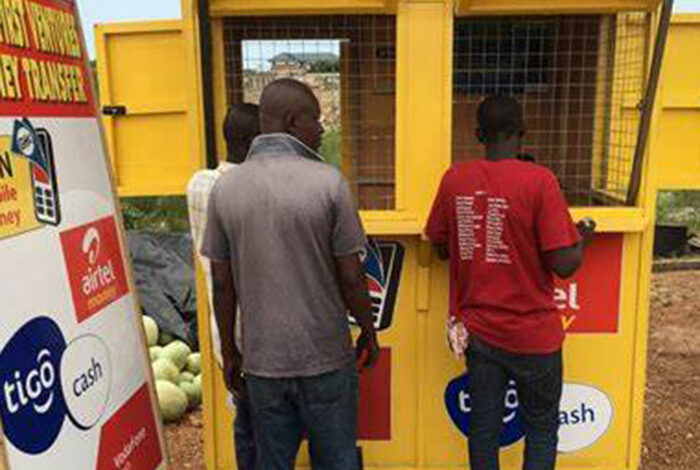
Ghana’s financial landscape is undergoing a quiet revolution, one marked not by the clang of mint presses or the shuffle of paper banknotes, but by the beeps, swipes and digital confirmations of mobile money transactions. In 2025 alone, the total value of Mobile Money (MoMo) transactions in Ghana has soared to a staggering GH¢4.5 trillion, according to the latest Bank of Ghana data, a figure that signals both economic promise and mounting risk in the nation’s journey toward a cash-lite economy.
This is not an isolated snapshot but a continuation of exponential growth. Monthly figures show that, by December 2025, mobile money transaction values had reached a record GH¢518.4 billion, driven by consumer activity and deepening adoption across urban and rural communities. Active MoMo accounts climbed to 26.7 million, with registered accounts exceeding 80 million, a testament to the widespread penetration and social acceptance of this digital financial tool.
The economic value of mobile money in Ghana cannot be overstated. MoMo platforms have become the backbone of the country’s retail payments system. They facilitate everything from everyday person-to-person transfers, bill settlements, merchant payments, merchant and micro-enterprise transactions, to business-to-business flows. By dramatically lowering transaction costs, expanding financial inclusion to previously underserved populations, and enabling immediate settlement of payments, mobile money has become a catalyst for economic activity and innovation.
For small traders and informal businesses, mobile money is no longer a convenience, it is an economic lifeline. It allows a roadside kiosk in Kumasi’s Central Market, a dressmaker in Tamale, and a digital entrepreneur in Accra’s Osu district to participate in the formal economy without the traditional overheads or barriers associated with brick-and-mortar banking. This has broadened the tax base, improved transparency in transactions and, crucially, supported government revenue mobilization through instruments like the e-levy, even as debates over its impact continue.
Yet, beneath the surface of this digital triumph lies a growing shadow, one of fraud, insecurity and erosion of public trust. As mobile money adoption has surged, so too have schemes designed to exploit both system vulnerabilities and user naivety. The Bank of Ghana, telecommunications operators, and cybersecurity authorities have all publicly acknowledged rising instances of MoMo fraud, where criminals leverage social engineering, phishing, and increasingly sophisticated tactics to siphon funds from unsuspecting users.
The Cyber Security Authority (CSA) recently revealed complex scam operations, including malware campaigns targeting users via WhatsApp Web, that specifically aim to steal mobile money credentials and one-time passwords (OTPs). Reports from ongoing field investigations suggest instances where funds are withdrawn without authorisation, often leaving victims with little recourse and significant financial loss.
Studies also show that mobile money fraud accounted for a significant proportion of financial scam cases in Ghana’s economy, a trend that risks undermining confidence in what should be an enabler of financial inclusion. Indeed, even as MoMo has revolutionised how Ghanaians transact, the spectre of illicit financial flows shows that no payment system, digital or otherwise is immune to exploitation.
The duality of mobile money’s impact raises pressing policy questions: Can Ghana sustain this digital financial revolution without simultaneously strengthening protections for users? The answer lies not in nostalgia for cash, but in robust regulation, investment in cybersecurity infrastructure, stronger public education campaigns on fraud awareness, and enforceable penalties for perpetrators of financial crime.
Telecommunications companies, fintech innovators and regulators must act with urgency to build resilience into the ecosystem. This includes advanced fraud detection systems, seamless in-app reporting mechanisms for suspicious activity, and partnerships with law enforcement that prioritise swift investigation and recovery of stolen funds.
Moreover, the Government and Bank of Ghana must deepen financial literacy programmes, especially targeting vulnerable groups who are disproportionately affected by scam tactics. A thriving digital payments ecosystem must be built on a foundation of trust, and trust is fragile when user funds are at risk.
The GH¢4.5 trillion milestone should be celebrated not as an endpoint, but as a call to action. Mobile money has delivered undeniable economic value, accelerating financial inclusion and formalising vast swathes of economic activity. However, this revolution will only be sustainable if the gains are protected, the risks mitigated, and user trust preserved.
In an era where every cedi carries the digital imprint of Ghana’s economic promise, ensuring that each transaction is secure is not just good policy; it is an imperative for national progress.



