“Made in Ghana” to Drive Economic Transformation – Trade Minister
By Praisebell Rosemond Larbi
The Minister for Trade, Agribusiness and Industry, Elizabeth Ofosu-Adjare, has announced that the government’s “Made in Ghana” agenda is being positioned as a central driver of Ghana’s economic transformation, with a renewed focus on quality, competitiveness, and value addition across key sectors of the economy.
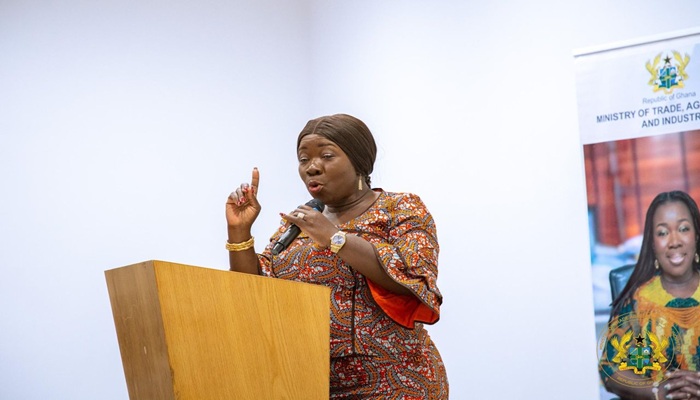
Speaking at the Government Accountability Series at the Jubilee House, the Minister said the administration is deliberately refocusing national development efforts on strengthening domestic production and promoting locally manufactured goods as a pathway to sustainable growth, job creation, and export expansion.
According to her, the Made in Ghana agenda goes beyond patriotic consumption and is anchored on building resilient industries capable of competing effectively on both local and international markets. She stressed that quality assurance remains the foundation of the initiative, noting that Ghanaian products must meet globally accepted standards if they are to command confidence and demand.
“Made in Ghana must be synonymous with quality, reliability, and excellence. We are determined to ensure that locally produced goods are not only competitive in price, but also in standard, durability, and consistency,” Madam Ofosu-Adjare said.
She explained that government is rolling out targeted policies to support local manufacturers, particularly small and medium-sized enterprises, with improved access to finance, modern technology, and expanded markets. These measures, she said, are aimed at strengthening the entire value chain, from raw material sourcing through processing to distribution and export.
The Trade Minister noted that promoting local production is critical to reducing Ghana’s heavy reliance on imports, which continues to exert pressure on the country’s foreign exchange reserves. By boosting domestic manufacturing and agribusiness processing, she said, Ghana can significantly cut import bills while increasing export revenues.
“Strengthening domestic production is key to import substitution, job creation, and foreign exchange generation. When we produce more of what we consume and export more of what we produce, the economy becomes stronger and more resilient,” she stated.
Madam Ofosu-Adjare highlighted agribusiness as a major pillar of the Made in Ghana strategy, pointing to its potential to drive rural development, create employment for young people, and add value to Ghana’s agricultural output. She said government is prioritising agro-processing, industrial parks, and special economic zones to support the transformation of raw materials into finished and semi-finished goods for both domestic and export markets.
She further assured manufacturers and investors that the government remains committed to creating an enabling business environment through regulatory reforms, infrastructure development, and stable trade policies. These efforts, she noted, are intended to improve ease of doing business and attract both local and foreign investment into Ghana’s industrial sector.
The Minister also called on consumers, corporate institutions, and public agencies to support the Made in Ghana agenda by deliberately patronising locally produced goods. She said increased domestic demand would provide the scale needed for local industries to grow, innovate, and compete internationally.
“The success of Made in Ghana is a shared responsibility. Government will provide the policy direction and support, but consumers and businesses must also make conscious choices to support local products,” she said.
Madam Ofosu-Adjare expressed confidence that with sustained commitment, the Made in Ghana agenda would reposition the economy towards industrialisation, reduce unemployment, and place Ghana firmly on a path of inclusive and sustainable growth.