BoG Pushes Bank Listings to Support Long-Term Savings
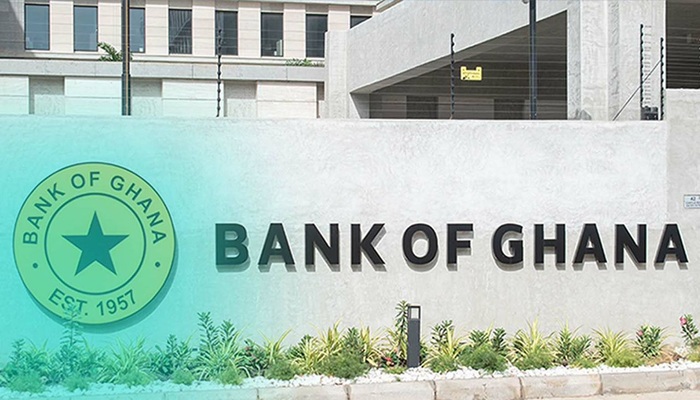
The Bank of Ghana (BoG) has renewed calls for more banks to list on the stock market, arguing that deeper equity markets are needed to absorb the country’s rapidly growing pension assets and strengthen financial stability after years of economic strain.
Speaking at the listing ceremony of First Atlantic Bank Plc on the Ghana Stock Exchange (GSE), Governor of the central bank, Dr. Johnson Pandit Asiama, said bank listings provide a viable investment outlet for domestic long-term savings, which are currently concentrated largely in government securities, exposing pension funds to structural risks.
Ghana’s pension industry is projected to surpass GH¢100 billion in assets this year, driven by mandatory contributions and steady growth in the formal sector. However, opportunities to invest these funds locally remain limited, leaving pension portfolios heavily skewed toward sovereign debt instruments.
“As a result, pension portfolios are heavily concentrated in government securities,” Dr. Asiama noted, adding that while such investments have played a stabilising role in the past, they now constrain long-term returns and increase system-wide risk.
He explained that listed banks offer regulated, transparent and cash-generating assets that can diversify pension investments without increasing exposure to foreign markets.
The listing of First Atlantic Bank marks the first initial public offering on the Accra bourse since 2018 and comes nearly nine years after the last wave of bank listings involving Agricultural Development Bank (ADB) and Access Bank.
The initial public offering was oversubscribed, attracting both institutional and retail investors a development the Governor said reflects renewed confidence in Ghana’s banking sector.
First Atlantic Bank, established in the mid-1990s and licensed as a universal bank in 2014, controls about 3.5 percent of industry assets and over 4 percent of total deposits, positioning it as a mid-tier player within the country’s competitive banking landscape.
By listing on the exchange, the bank has strengthened its capital base, broadened its ownership structure and subjected itself to higher disclosure standards and market scrutiny, Dr. Asiama observed.
“When a bank lists on the stock market, it does not merely change its share register. It changes its relationship with the public, with investors and with the economy it serves. Ownership broadens, accountability deepens and transparency becomes continuous rather than episodic,” he said.
Dr. Asiama placed the renewed push for bank listings within the context of Ghana’s recovery from the 2022 debt crisis, when inflation peaked at 54.1%, the cedi lost more than half its value and foreign reserves fell to historic lows.
The Domestic Debt Exchange Program placed significant strain on banks, pension funds and capital markets, exposing structural weaknesses within the financial system.
Although macroeconomic indicators have improved with inflation easing to 6.3 percent in November 2025, the cedi appreciating by more than 24 percent this year and foreign reserves rising to about US$11.4 billion the Governor stressed that recovery must now be followed by structural reform.
One major concern, he said, is ownership concentration within the banking sector, noting that foreign-owned lenders control about 60 percent of banking assets.
This, he explained, can amplify foreign exchange pressures during periods of stress as profits are repatriated abroad.
According to him, broader domestic ownership through stock market listings would help retain liquidity within the economy, spread risk and reduce volatility.
“By broadening ownership to include pension funds, insurance companies, asset managers and ordinary Ghanaians, risk and reward are distributed more widely. Profits do not exit the system all at once; they circulate longer within the domestic economy,” Dr. Asiama added.