ISSER Backs Gov’t’s New ‘Value for Money Office’ to Tackle Inflated Public Contracts
The Institute of Statistical, Social and Economic Research (ISSER) has thrown its weight behind government’s plan to establish a permanent Value for Money (VfM) Office, describing the initiative as a vital tool to curb inflated public contracts and improve efficiency across the public sector.
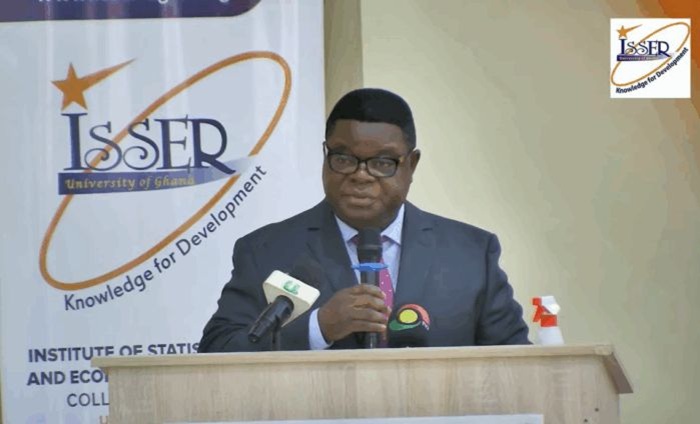
The endorsement came from the former Director of ISSER, Professor Peter Quartey, and the Institute’s current Director, Professor Robert Darko Osei, during ISSER’s independent review of the 2025 Mid-Year Budget Statement at the University of Ghana. The annual forum provides a non-partisan platform for assessing the state’s fiscal policies and priorities, and this year’s discussions also scrutinised the newly presented 2026 Budget themed “Resetting for Growth, Jobs, and Economic Transformation.”
The budget outlines the architecture of the proposed VfM Office, which will mandate Value for Money certification for all major public contracts. It is expected to work closely with oversight institutions, including the Auditor-General, to impose sanctions for waste, fraud and inflated pricing. Government also plans to introduce a VfM Transparency Portal to publish procurement processes, contract details and citizen feedback in real time.
According to the Finance Ministry, the office will serve as an independent, enduring watchdog to strengthen accountability and fiscal integrity, addressing long-standing issues of inflated project costs and weak oversight across ministries, departments and agencies.
Prof. Quartey noted that the establishment of the office could translate into “massive savings” for the state, referencing the recurring procurement abuses revealed in successive audit reports.
“There are a lot of procurement infractions. There are a lot of inflated figures when it comes to procurement, construction, et cetera. Sometimes the value can be as high as four times the original cost,” he said.
He described the introduction of cost benchmarks and pre-approval certification as a “structural reform” that could help clean up public spending.
“It is not always about revenue. It is about effective, efficient spending,” he added. “When you enhance revenue mobilisation and also ensure that you spend efficiently, then we can grow the economy and deliver expressways and other big-ticket projects.”
Prof. Osei also welcomed the proposal, calling it a much-needed intervention to boost public sector efficiency. He attributed Ghana’s spending challenges to two major factors—poor value for money and weak project prioritisation.
“And so having an office that can effectively work to ensure that we are getting the best for every cedi we spend, I think it’s a wonderful idea,” he said.
However, he warned that the effectiveness of the office will ultimately hinge on rigorous implementation, institutional independence and consistent enforcement of sanctions. He stressed that the office must operate as a robust watchdog if it is to deliver the outcomes promised in the budget.
ISSER’s backing is expected to add momentum to public debate as government readies the framework for one of its flagship public financial management reforms in the 2026 fiscal year.