Ghana’s 2026 “Reset” Budget: Between Hope and Hard Truths
By Praisebell Rosemond Larbi
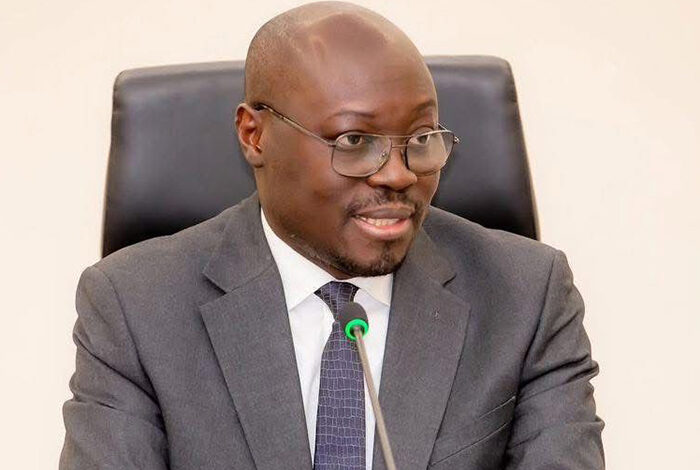
When Minister of Finance, Dr. Cassiel Ato Forson stood in Parliament to deliver the 2026 Budget Statement and Economic Policy, he used a phrase that resonated deeply: a “reset”. This is not merely a budget for managing numbers, according to him; it is a deliberate pivot toward growth, jobs, and economic transformation. However, beyond the optimistic rhetoric lies a complicated web of structural choices, external dependencies, and political risks.
For ordinary Ghanaians, the 2026 Budget may read like a message of hope, more funding for infrastructure, social protection, and agriculture. For markets and institutions, it signals a renewed commitment to fiscal discipline. Yet, for skeptics, the proof will be in execution.
The Reset Agenda: More than Just Numbers
On the face of it, this budget is bold. The government has proposed GH¢302.5 billion in total expenditure for 2026, representing roughly 18.9% of GDP. To fund its ambitions, it expects GH¢268.1 billion in revenues and grants. That leaves a commitment basis deficit of GH¢34.4 billion, about 2.2% of GDP.
However, perhaps most importantly, the budget projects a primary balance surplus of GH¢23.3 billion (1.5% of GDP). This is not a symbolic number; it is the anchor of the budget’s fiscal discipline, in line with Ghana’s Fiscal Responsibility Act. On a cash basis, however, there is more pressure: a projected deficit of GH¢64.2 billion (4.0% of GDP). The plan is to finance that gap with a balanced mix of foreign and domestic borrowing. In his presentation, Dr. Forson framed the 2026 Budget as the next stage after stabilization. “This Budget builds on the stability of 2025 and channels it into action that delivers: more jobs; better infrastructure; stronger industries; and better public services,” he said. The ambition is clear: move from crisis response to a structural transformation that repositions Ghana competitively.
Independent Economists Weigh In: Cautious Praise, But Eyes Open
Amid the political spotlight, independent economists have offered more nuanced takes. Among them, Dr. Felix Larry Essilfie, a development economist, stands out for his thoughtful balance.
Dr. Essilfie applauds the government’s 20% effective VAT rate (down from 21.9%) and its broader tax reform package. According to him, this is not just populist politicking: it’s rooted in “well-founded empirical calculations” that try to thread a delicate needle, providing relief to businesses while still raising enough revenue. Speaking on ZED 101.9 FM’S THE FOCUS, he argues, is crucial because Ghana needs fiscal space not just for recurrent spending, but for capital investments and social protection measures like free sanitary pads. In his view, a zero-tax demand, sometimes made by businesses, may sound attractive, but in a developing economy, it’s simply unsustainable.
Equally, he welcomes the decision to scrap the COVID-19 Health Recovery Levy. That levy removed a burden from both individuals and firms at a time when the economy is still rebalancing. For Dr. Essilfie, that relief is a signal of responsiveness from government, not a sign of fiscal recklessness.
On agriculture, he is particularly bullish about the Farmer Service Centres, saying that mechanization and input support, if delivered properly, could be transformative for rural productivity. Oil palm, too, becomes more than an extractive crop, with value addition and out-grower schemes, it could become a real engine of rural jobs and export growth.
But Dr. Essilfie does not brush aside risk. He warns that ambitious infrastructure plans, like the Big Push, require not just funding, but strong institutional capacity: for procurement, project management, corruption control, and maintenance. Without that, the reset could falter.
Economist and Lecturer at the University of Ghana, Professor Patrick Asuming adds a sharper critique on the revenue side, particularly around tax compliance. His points are vital for understanding the sustainability of the reset. He has urged stronger tax compliance and enforcement in Ghana, emphasizing that the country’s tax system has “significant potential that remains largely untapped.” As he said on Zed FM’s Business Breakfast Show, international institutions often project Ghana’s capacity based on tax laws, rates, and economic structure, but what matters is how much is actually collected.
VAT is a particular concern. According to Professor Asuming, Ghana underperforms in VAT mobilization. He argues that the complexity of the current VAT system, with multiple levies, flat rates, and exemptions, fuels non-compliance. He said that failure to reform this architecture quickly threatens fiscal consolidation efforts. Professor Asuming estimates that if VAT compliance were improved (for example, if collection rose from about 60% of potential to 90%), Ghana could significantly boost its VAT revenue. In his words, this alone could “solve a lot of our revenue problems.”
He has also criticized the delay in VAT reform: earlier government promises to simplify and unify VAT rates have not been met, creating uncertainty in business and jeopardizing one of the budget’s central revenue strategies.
Importantly, Professor Asuming remains skeptical of introducing new taxes. As he noted speaking on ZED FM, he would be “extremely shocked” if the government imposes additional levies. Instead, he argues that rationalizing existing taxes (reducing exemptions, simplifying the VAT structure) and strengthening compliance would be far more effective.
He also warns that without strong enforcement, even a modernized VAT system may not yield expected gains: “If we improve VAT compliance … the revenue we can generate will solve a lot of our revenue problems.
Economic analyst Emmanuel Boateng, in an interview with ZED FM frames the budget in civic terms. Speaking on national media, Boateng argues that citizen expectations matter, and that real transformation may require Ghanaians to accept hard choices in the short term. He warns that without public buy-in, even well-designed policies could flounder: “transformational things require citizens to be willing to accept difficult decisions in the short term for long-term national benefit.”
Mr. Boateng also sees a psychological shift in the economy. He argues that Ghana is moving from a mindset of crisis response (stabilization) into one of renewed optimism and institutional reconstruction. That, he believes, is as important as any line item in the budget.
The Multilateral Lens: IMF, World Bank, and External Validation
For a reset to stick, especially one as ambitious as this, international partners matter. Moreover, on that front, the 2026 Budget seems calibrated for alignment.
In October 2025, the International Monetary Fund (IMF) reached a staff-level agreement with Ghana under its Extended Credit Facility (ECF). One of the key commitments: Ghana will adopt a 2026 budget that targets a 1.5% of GDP primary surplus on a commitment basis, consistent with its Fiscal Responsibility Framework.
The IMF also emphasized the need for structural fiscal reforms: raising domestic revenue, strengthening public financial management and public investment systems, and boosting the credibility of the fiscal framework.
Debt restructuring is also part of the picture. According to the IMF, Ghana’s “comprehensive debt restructuring” is progressing, including bilateral deals under the G20 Common Framework.
Meanwhile, Ghana expects support from the World Bank, likely via a Development Policy Operation, to align with some of its policy reforms in 2026. Such support would not just provide financing; it would affirm that major institutions see potential in Ghana’s reset strategy.
This external validation is not trivial. It sends a signal to investors that Ghana’s budget is not a short-term populist package, but part of a disciplined program anchored by multilateral endorsement.
Revenue Shortfalls
While the budget makes bold revenue commitments, especially via VAT and compliance reforms, there’s no guarantee the expected yields will materialize. The plan leans on the Medium-Term Revenue Strategy (MTRS) to improve arrears collection, streamline exemptions, and digitize tax administration. But if businesses resist, or if administrative capacity lags, revenue could underperform, putting pressure on financing plans.
There is also risk in assuming continued strong economic growth. The reset is predicated on growth, but external shocks, global commodity prices, interest rate hikes, or currency swings, could derail that.
Borrowing and Debt Dynamics
With a cash deficit of 4% of GDP, the government must borrow. While the mix of foreign and domestic financing is intended to spread risk, high external borrowing exposes Ghana to currency risk, and refinancing risk if global capital conditions tighten.
Although Ghana has made strides in debt restructuring, it still faces significant obligations. The success of its reset depends heavily on maintaining favorable relations with bilateral and multilateral creditors, and on sustaining confidence among investors. Any backsliding could reverse gains.
Implementation Risk
Perhaps the most underappreciated risk is implementation. Ambitious allocations for infrastructure, agriculture, and social protection are only as good as delivery mechanisms. Building roads, but failing to complete them; setting up farmer service centres, but not staffing them; launching value chain programs, but not ensuring smallholder inclusion, these are real risks many observers highlight.
Moreover, corruption, bureaucratic delays, and weak public procurement remain long-standing challenges in Ghana. For the Big Push and other large-scale programs, these systemic issues will need to be addressed, not just hoped away.
Public Trust and Social Expectations
Emmanuel Boateng, the economic analyst, is right to emphasize that citizens must buy into the reset vision. But what if they don’t? Populations weary of unfulfilled promises could demand quick wins. If transformational projects take too long to feel in people’s lives, political pressure could build.
There’s also tension between what is politically desirable (e.g., visible new schools, roads, hospitals) and what is fiscally responsible. Managing those expectations, especially in a country still recovering from crisis, will require careful communication, transparency, and accountability.
Why This Budget Matters: More Than Just Money
At its core, the 2026 Budget is not just a financial plan: it is a developmental statement. The government is declaring that stabilization (the priority of the last few years) is not enough. Ghana must now leverage that stability to build.
If successful, the reset could lay the foundation for a new growth model: one where infrastructure catalyzes industry, agriculture becomes more productive and value-driven, and human capital, especially young people are empowered. The Big Push, the agricultural interventions, and social spending together create a coherent vision: transform productivity, reduce inequality, and accelerate private-sector-led job creation.
Moreover, by aligning with the IMF and seeking World Bank engagement, Ghana is signaling to investors that this is not a budget built on populist flair, but on prudence and credible reform. The 1.5% primary surplus target is a linchpin: it suggests Ghana is serious about long-term debt sustainability.
Conclusion: A Reset or a Risky Overreach?
Ghana’s 2026 Budget is one of the most consequential in recent memory. It is not a timid plan to hold the line; it is a bold bet on transformation. By combining fiscal discipline with heavy investments in infrastructure, agriculture, energy, and human capital, it aims to pivot Ghana into a new growth era.
Independent economists like Dr. Felix Larry Essilfie, Professor Patrick Assuming and Emmanuel Boateng see much to admire, a credible tax reform, a realistic revenue strategy, and a renewal of growth optimism. Meanwhile, multilateral institutions such as the IMF appear to support the path, signaling confidence in Ghana’s reset. If Ghana pulls this off, the 2026 Budget will be more than a reset, it will mark the beginning of a transformation. But if it stumbles, the reset could turn into a mirage, and the very credibility it seeks to build may unravel. For now, the country stands at a crossroads: between the promise of renewal and the risk of another cycle of dashed hopes.