

Deeper Fiscal Challenge Faces Economy Despite Budget of Optimism – Professor Peprah
By Praisebell Rosemond Larbi
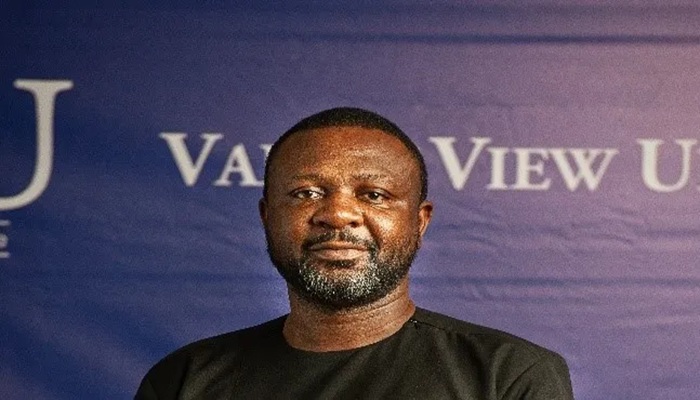
US-based Associate Professor of Finance, Professor Williams Peprah, has raised fresh concerns about Ghana’s fiscal outlook, warning that beneath the optimistic tone of the 2026 Budget lies a much deeper structural challenge that could strain the economy in the coming year.
Delivering his analysis titled “Ghana’s 2026 Budget: Stability Gains, Fiscal Gaps, and the Rising Risk of Crowding-Out Effect,” Professor Peprah explained that when the burden of interest payments on existing debt is fully accounted for, the country’s fiscal deficit expands sharply. “When interest payments on existing debt are considered, the overall fiscal deficit widens considerably, that is –2.2% of Gross Domestic Product on a commitment basis and, 4.0% on a cash basis. The difference between the primary surplus and the overall deficit is a balancing gap of roughly 3.7% of GDP, underscoring the heavy weight of interest obligations on public finances,” he stated.
He cautioned that this widening fiscal gap suggests that despite the government’s relatively improved revenue mobilisation, borrowing will still be required to finance interest costs and key priority programs. The 2026 Budget earmarks significant investment across sectors, including the Big Push Infrastructure Program, expanded agricultural interventions, and increased allocations to health and education. According to him, although these expenditures are vital for stimulating inclusive growth, they further heighten financing pressures.
Warning of an Impending Crowding-Out Risk
Professor Peprah, who lectures at Andrews University, further warned of a looming crowding-out effect if domestic borrowing escalates in 2026. “A serious warning must be sounded: Ghana risks a severe crowding-out effect if domestic borrowing surges in 2026. Because the balancing gap remains large and interest payments continue to absorb a substantial share of resources, the Government will need to access more domestic credit to close its financing shortfall,” he cautioned.
The budget projects domestic financing at GH¢71.9 billion, equivalent to 4.4% of GDP. Out of this, GH¢38.3 billion is expected to be sourced from commercial banks, while GH¢33.4 billion will be raised from non-bank institutions. These funds will be mobilised primarily through the issuance of long-term and short-term government securities.
He stressed that when government becomes the largest borrower in the domestic credit market, commercial banks often increase their holdings of government securities due to their lower risk profile. This, he explained, results in rising interest rates as credit demand intensifies, making it increasingly difficult for private businesses to secure affordable financing for expansion, investment, and production. The ripple effect, he warned, could stifle private sector growth, the engine of job creation.
In his concluding remarks, Professor Peprah noted that although the 2026 Budget presents a message of stability and forward-looking development, significant risks remain below the surface. “The 2026 Budget carries a tone of optimism, grounded in improved fiscal discipline and ambitious development priorities. Yet the underlying fiscal gaps, rising interest obligations, and the increasing likelihood of crowding-out introduce caution,” he said.
He emphasised that Ghana’s growth prospects for 2026 will depend largely on how effectively government manages domestic borrowing, strengthens revenue mobilisation, and executes its investment programs without undermining private sector activity.



