Local Vehicle Assembly Central to Ghana’s Auto Future -VW Chief
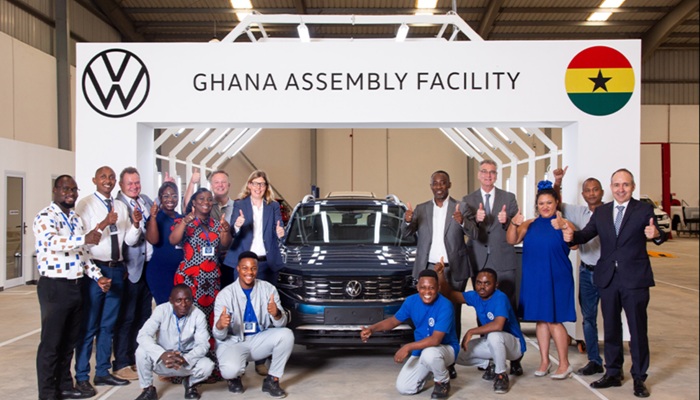
By Praisebell Rosemond Larbi
Chief Executive Officer of Volkswagen Ghana, Jeffrey Oppong Peprah, has stated that Ghana’s expanding local vehicle assembly industry is crucial for creating a sustainable and transparent domestic used-car market that has the potential to transform the country’s automotive sector.
Speaking at Volkswagen’s 5th Anniversary and unveiling of T-Cross SUV in Accra, Mr. Oppong Peprah said local assembly provides the foundation for an integrated automotive value chain that will reduce reliance on imported second-hand cars, create jobs, and drive industrial growth.
“Local vehicle assembly is not only about producing brand-new cars. It’s about laying the foundation for a future used car market that is traceable, affordable, and trusted. This is how we build an industry that serves both the present and future needs of consumers,” he explained.
Volkswagen Ghana began operations in 2020 and has since assembled more than 2,600 vehicles at its Tema plant, which has an annual capacity of 5,000 units. The plant forms part of Volkswagen’s broader strategy to establish Ghana as a central hub for the company’s operations in West Africa under the African Continental Free Trade Area (AfCFTA).
However, Mr. Oppong Peprah admitted that the industry continues to face structural challenges, particularly limited access to auto financing, which has constrained local demand and slowed production growth.
He noted that imported used vehicles currently account for over 70 percent of annual car registrations in Ghana, with the country importing an average of 100,000 used cars each year between 2015 and 2018, making it one of the largest used car markets in West Africa.
“The transition will be difficult, but it is necessary if Ghana wants to build an integrated and future-ready automotive industry, emphasizing that local assembly must evolve alongside financing reforms and consumer education to gain public acceptance,” he remarked.
According to him, building a domestic used car ecosystem would deliver multiple long-term benefits, ensuring affordability for middle-income households, creating a formal resale structure, and improving the quality and safety of vehicles on Ghanaian roads.
While acknowledging that the shift could initially disrupt the existing used car import trade, Mr. Oppong Peprah maintained that the long-term gains far outweigh the short-term costs. “This is not a zero-sum situation. It is an all-on-board movement that requires collaboration between government, industry players, and the public to ensure a smooth transition,” he said.
He reaffirmed Volkswagen Ghana’s commitment to its long-term vision, calling for policy consistency, access to affordable financing, and stronger public awareness campaigns to promote locally assembled vehicles.
“With the right policies and support, Ghana can develop an automotive industry that not only assembles cars but sustains a vibrant, transparent, and future-ready used car market,” he concluded.
Volkswagen Ghana Assembly Facility