

Women lead Ghana’s cross-border trade
By Praisebell Rosemond Larbi
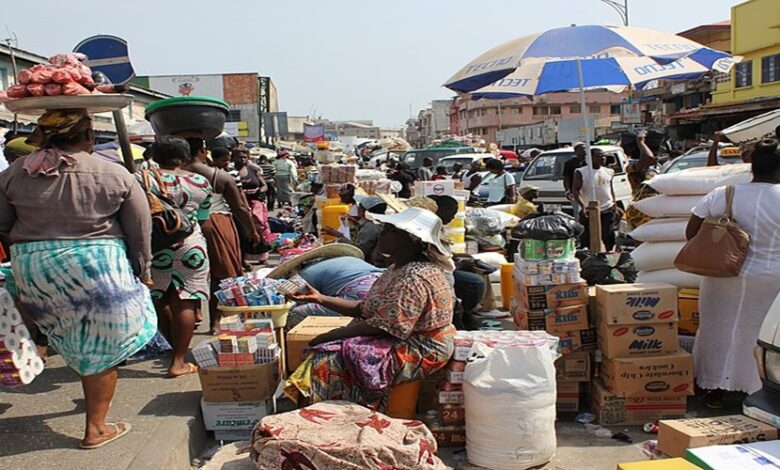
Women traders are playing an increasingly dominant role in sustaining Ghana’s cross-border commerce, according to new data from the Ghana Statistical Service (GSS), which highlights their leadership in import and market operations along the country’s northern and western frontiers.
The findings, contained in the 2024 Informal Cross-Border Trade (ICBT) Survey, reveal that women account for the majority of informal import and retail activities, particularly in regions bordering Burkina Faso and Côte d’Ivoire.
Their participation, the report notes, has been critical in maintaining the steady flow of essential goods, creating employment, and strengthening Ghana’s regional economic links.
While men continue to dominate transport and logistics aspects of exports, women lead the trade in consumables, textiles, cooking oil, rice, and livestock products that remain central to household consumption and small-scale enterprise across Ghana’s border communities.
According to the GSS, the country’s total informal trade for the fourth quarter of 2024 was estimated at GHS7.4 billion, representing 4.3 per cent of total trade.
Ghana recorded significant trade surpluses with Burkina Faso (GHS576 million) and Côte d’Ivoire (GHS378 million), underscoring the scale of informal exports driven by community-based traders, many of whom are women.
“The data reinforce the indispensable role of women in sustaining border economies. They are not merely participants but strategic actors linking Ghana’s domestic markets to the broader West African trading ecosystem,” the GSS report stated.
In regions such as the Upper East and Upper West, women traders are the backbone of cross-border commerce, often moving goods through small checkpoints, informal routes, and local markets.
The Upper East Region alone accounted for informal export volumes fifteen times greater than those of the Savannah Region, making it Ghana’s most vibrant hub of informal exports.
Experts are urging the government to introduce targeted financing and trade facilitation programmes that recognise women as core economic actors rather than peripheral players.
“Formalising support for these traders through access to credit, simplified customs procedures, and safety infrastructure will boost Ghana’s competitiveness and unlock the full potential of AfCFTA,” said one trade analyst. The GSS emphasised that mapping and understanding informal trade flows will remain critical for shaping inclusive policies that harness women’s contribution to Ghana’s trade-driven growth agenda.



