

Women farmers trained on intercropping, organic farming in Tolon
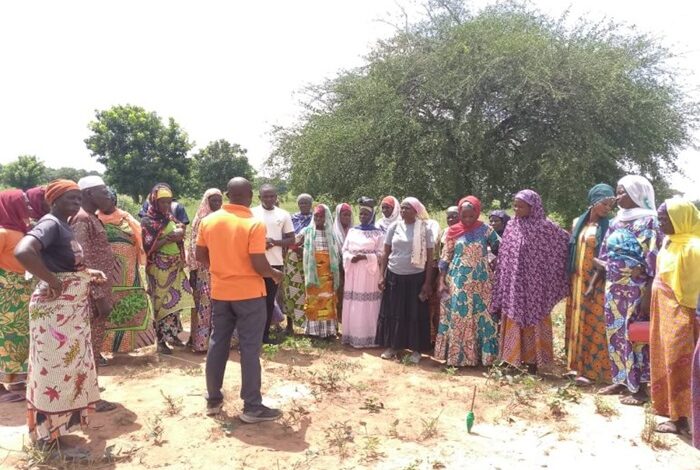
Women farmers in the Kobilmahigu community in the Tolon District of the Northern Region have been trained in intercropping and organic farming practices to improve soil fertility and boost crop yields sustainably.
The workshop, organised by the Savannah Women Farmers Association (SWFA), formed part of the Climate Change Resilience, Landscape Restoration and Improved Livelihoods project, funded by the Food and Agriculture Organisation (FAO).
The initiative aims to promote climate-smart agriculture and strengthen the resilience of smallholder women farmers in northern Ghana.
Madam Salamatu Sakara, Chairperson of SWFA, said the training was designed to build the capacity of women in sustainable farmland management and agroecology to promote environmental restoration and improve livelihoods.
She disclosed that the Association plans to establish a fenced community garden powered by a solar borehole to support year-round farming activities.
“This garden will not only serve as a source of income but will also support the Village Savings and Loans Scheme operating in the community, helping women to save and strengthen their financial resilience,” Madam Sakara said.
She encouraged participants to apply the knowledge gained and share it with other women farmers to promote sustainable agricultural practices. She also urged them to desist from cutting down trees and prioritise tree planting to restore vegetation and ensure sustainable crop production.
Mr Edmund Ansaayiri, Agricultural Extension Agent for the Tali Operational Area, who facilitated the training, urged the women to adopt intercropping as a practical and sustainable method of maintaining soil fertility and boosting productivity.
He explained that intercropping, which involves growing two or more crops on the same field, enhances soil nutrients, reduces pest infestations and promotes biodiversity.
“When crops such as maize and legumes are grown together, the legumes fix nitrogen into the soil, enriching it naturally and reducing dependence on chemical fertilisers,” Mr Ansaayiri said.
He advised farmers to complement intercropping with organic farming techniques such as composting and the use of animal manure, warning that excessive application of agrochemicals and weedicides could degrade the soil and harm the environment.
More than 100 women farmers participated in the workshop, which featured practical demonstrations on intercropping methods, compost preparation and other best agronomic practices.
Participants expressed appreciation for the knowledge gained, noting that the adoption of intercropping and organic farming would help reduce production costs, maintain soil health and improve long-term productivity.



