Acting CJ calls for accountability, transparency in Africa’s extractive deals
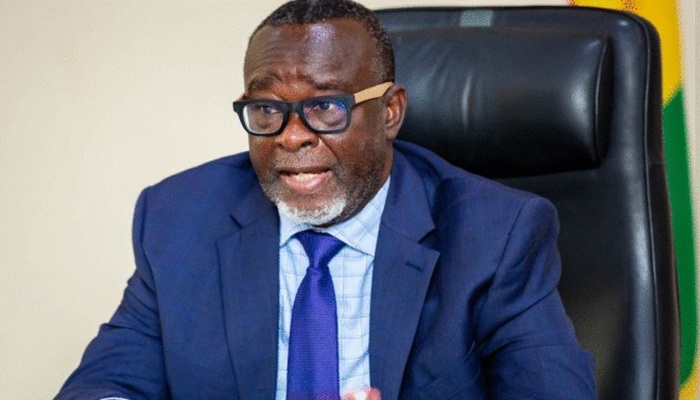
The Acting Chief Justice Paul Baffoe-Bonnie has urged African nations to make transparency, accountability, and local involvement the main focus of all deals in the extractive sector.
Justice Baffoe-Bonnie made the call when he opened the 2025 Annual African Bar Association Conference in Accra.
“Our people must not be mere spectators in their own dispossession. We must insist on transparency, accountability, and local participation in all extractive agreements,” he stated.
Justice Baffoe-Bonnie said the theme underscored the need for economic and intellectual liberation. He urged African nations to take control of their resources and curb financial leakages.
“We cannot develop when more wealth leaves our shores each year than enters through trade and aid combined. We must reform our institutions of negotiation,” Justice Baffoe-Bonnie said, stressing that: “those who negotiate for Africa must be armed not only with contracts but also with conscience.”
He further advocated investment in intellectual sovereignty, legal knowledge, and economic frameworks tailored to Africa’s development.
The Acting Chief Justice further stressed the importance of intra-African trade and called for the full utilisation of the Africa Continental Free Trade Area Secretariat to build a unified and powerful economy.
“If we can trade cocoa for machinery, energy for technology, ideas for innovation, we shall no longer need to plead for what we can produce.
“We must also practise smart diplomacy by engaging with the world not as beggars but as partners, diversifying alliances and ensuring that every handshake leaves both hands equally full,” he noted.
Justice Baffoe-Bonnie observed that foreign interests often influenced governance and policy decisions through subtle persuasion or overt pressure, shaping legal and institutional reforms.
“It is evident in the extraction of our natural resources, where concessional agreements too often enrich the few and impoverish the many, leaving our lands barren as others prosper from their bounty.
“That is not all. It echoes through our economies, where structural dependencies and consciences are woven so tightly that the very fabric of our individual sovereign will is strained,” he indicated.
Justice Baffoe-Bonnie further noted that foreign influence extended to national security arrangements, where external advisers and partners often shaped national agendas under the pretext of cooperation.
He cited data from the African Union and the United Nations Economic Commission for Africa, which indicated that Africa loses between USD50 billion and USD60 billion each year through illicit financial flows involving profits that are hidden, misused, or siphoned off through tax evasion and trade manipulation.
“Over the last 50 years, it is estimated that more than one trillion dollars have been illicitly drained from the continent, an amount equal to all development aid Africa received within the same period,” he highlighted.
The Acting Chief Justice noted that Africa remained the richest continent in natural resources, holding 30 per cent of the world’s minerals, 40 per cent of gold, 60 per cent of cobalt, and 90 per cent of platinum, and producing 12 per cent of global oil, in addition to vast arable land and abundant sunlight.
“Yet paradoxically, we are still called poor. While others govern their resources, we merely harness ours, allowing others to decide their value, control their pricing, and benefit from their proceeds.
“It is not exploitation alone that impoverishes us; it is misgovernance. It is not lack of wealth; it is lack of will,” remarked.
Justice Baffoe-Bonnie emphasised that African countries must govern their resources with justice, equity, and foresight.
He cited Ghana’s Constitution, which recognises natural resources as the property of the people held in trust by the President.
Justice Baffoe-Bonnie also described the establishment of the Gold Board in Ghana as a promising example of deliberate policy aimed at coordinating the gold trade and ensuring that proceeds flow through national systems to enhance foreign exchange earnings.
The event brought together justice advocates, members of Bar Associations from various countries, Ministers of Justice, and Attorneys-General. The conference was held on the theme: “Foreign Investment in Africa: Investment or Exploitation.”