

Prof Bokpin flags cedi as ‘political tool’
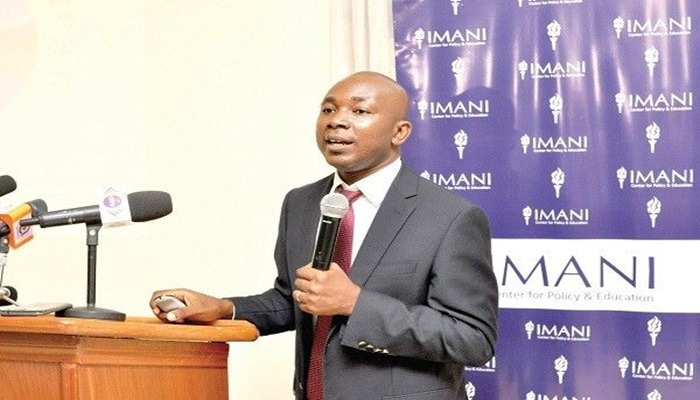
Economist and Professor at the University of Ghana, Professor Godfred A. Bokpin, has criticised what he describes as the politicisation of the country’s exchange rate management.
According to the economics professor, policymakers have turned the cedi’s short-term performance into a “political trophy” rather than treating it as a tool for building a productive and resilient economy.
Speaking to journalists in Accra, Prof Bokpin said successive governments have focused more on projecting a strong cedi to score political points than on addressing the structural weaknesses that make the currency vulnerable.
“The exchange rate has become a political tool. Governments are eager to boast about a strong cedi, even when it strains the economy,” he said.
Prof Bokpin explained that this approach, where a temporarily firm cedi is celebrated as evidence of economic competence, has come at a significant cost to the economy.
Billions of cedis, he noted, are often injected into defending the currency, funds that could otherwise be channelled into productive ventures such as manufacturing, agriculture, and value addition.
According to him, the obsession with maintaining an artificially strong currency drains liquidity, pushes up interest rates, and ultimately weakens private sector confidence.
“The resources we deploy to stabilise the cedi could have been used to boost production, stimulate investment, and create sustainable jobs,” Prof Bokpin stressed.
He also drew parallels with China’s long-term economic management strategy, explaining that despite being one of the largest holders of foreign exchange reserves, China deliberately maintains a stable, not overvalued, exchange rate to support exports and industrial competitiveness.
“China’s model is built on strategic intent, not a desire for short-term applause. They understand that a managed, realistic exchange rate sustains growth, rather than one propped up to create the illusion of strength,” Prof Bokpin stated.
He cautioned that Ghana’s fixation on defending the cedi risks deepening structural imbalances and concealing vulnerabilities in the real economy.
“Economic strength is not about short-term numbers. Real progress comes when the economy creates jobs and opportunities,” Prof Bokpin emphasised.
He urged policymakers to move away from politically motivated currency management and instead focus on long-term reforms that build confidence in production, exports, and sustainable investment.
“We must do what is economically right, not what looks good politically. Short-term optics may win headlines, but they undermine long-term development and investor trust,” Prof Bokpin added.



