Ghana urges Türkiye, Africa shift from trade to investment
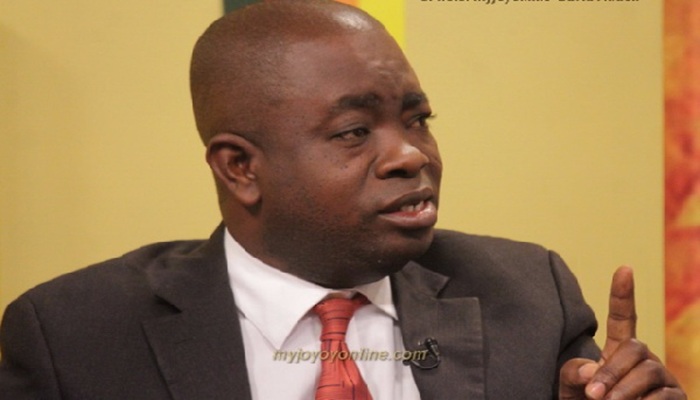
Ghana has called on Türkiye and African nations to redefine their economic engagement by moving beyond traditional trade to a model based on co-investment, technology transfer, and industrial collaboration as the foundation for long-term, inclusive growth.
Addressing the 5th Türkiye–Africa Business and Economic Forum (TABEF) in Istanbul, Ghana’s Deputy Minister for Trade, Agribusiness and Industry, Sampson Ahi, said both regions must focus on joint value creation, innovation, and sustainable industrial partnerships rather than only exchanging commodities.
“We must advocate a transformative shift in Türkiye–Africa relations. Our future lies in partnerships that deliver shared value, deepen industrial capacity, and create jobs for our young populations,” he said.
Held under the theme “Navigating Global Economic Uncertainty: Strengthening Türkiye–Africa Partnerships,” the Forum brought together policymakers, investors, and business leaders from both regions. Mr Ahi stressed that a deepened alliance between Türkiye and Africa is crucial for building resilience amid volatile capital flows, global supply chain disruptions, and geopolitical tensions.
He described the Türkiye–Africa relationship as a “shared vessel” navigating global turbulence, emphasising that sustainable progress rests on trust, policy alignment, and mutual benefit.
Highlighting Africa’s economic potential, the Deputy Minister pointed to the African Continental Free Trade Area (AfCFTA), whose Secretariat is based in Accra, as a catalyst for industrial integration. He said Ghana is advancing competitiveness through programmes such as the Accelerated Export Development Program, Feed the Industry Program, Made-in-Ghana Campaign, Rapid Industrialisation for Jobs Initiative, and schemes supporting women and youth in agribusiness.
“Agribusiness remains at the heart of Ghana’s transformation agenda, emphasising government policies to strengthen value chains, raise productivity, and expand small and medium enterprises’ participation in export markets,” he noted.
Turning to Türkiye’s role, Mr Ahi commended the country’s growing presence in Africa, evolving from a trading partner to a strategic investor. Turkish investments in infrastructure, healthcare, and manufacturing are already visible in Ghana. Bilateral trade between the two nations reached $888 million in 2023 and is projected to surpass $900 million by 2025, with both sides targeting $1 billion by 2027.
He observed that while current trade is dominated by Ghanaian exports of gold and cocoa and Turkish manufactured imports, the future must focus on joint ventures in high-value sectors such as pharmaceuticals, renewable energy, agri-food processing, and digital infrastructure.
To achieve this, Mr Ahi called for policy harmonisation, investment de-risking mechanisms, and stronger public–private partnerships to attract long-term capital.
Describing Türkiye and Africa as “natural partners”, with Türkiye bridging Europe and Asia, and Africa emerging as a global growth frontier, he proposed a new framework for South–South cooperation anchored in innovation and shared prosperity.
“Let us advocate for a partnership that is bold in ambition, balanced in execution, and transformational in outcome. We must move from goodwill to concrete action, and from dialogue to delivery,” Mr Ahi declared.
Reaffirming Ghana’s readiness to strengthen engagement with Türkiye, the Deputy Minister said both sides must translate the Forum’s resolutions into tangible investment partnerships that accelerate Africa’s industrialisation and build shared prosperity.