Illegal mining, logging threaten forests — FORIG
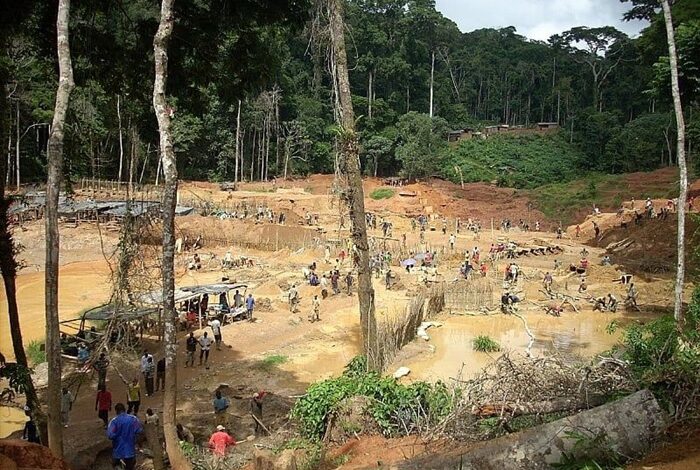
The Forest Research Institute of Ghana (FORIG) has sounded the alarm over the escalating rate of environmental destruction caused by illegal mining (galamsey), uncontrolled logging, unauthorised farming, and encroachment on forest reserves, warning that Ghana’s forest ecosystems are approaching a critical tipping point.
Speaking at the 2nd National-Level Stakeholder Workshop on Threatened Trees Conservation, the Project Coordinator at FORIG, Dr James Amponsah, said the rapid degradation of Ghana’s natural forests is endangering the survival of several rare and indigenous tree species, some of which are now on the brink of extinction.
“At the moment, there are four tree species that are critically endangered. Some of these trees are so rare that, throughout our five-year search across Ghana’s high forests, we have identified only seven individual specimens,” Dr Amponsah revealed.
He lamented that the destructive impact of illegal mining and logging has become a major setback to scientific research, forest restoration, and biodiversity preservation.
“Illegal farming contributes to forest degradation, but our main challenge has been illegal logging and mining. You may earmark a tree for study and propagation, only to return the next day to find it destroyed by illegal miners,” he said.
Dr Amponsah explained that the increasing loss of forest cover not only threatens tree species but also destabilises the ecosystems that support wildlife, water resources, and local communities that depend on forest resources for their livelihoods.
According to the Forest Research Institute, Ghana’s forest reserves have been shrinking at an alarming rate due to illegal human activities that disregard environmental laws and management plans.
The resulting deforestation is accelerating soil erosion, increasing the risk of floods, and reducing the country’s carbon absorption capacity, which is vital for mitigating climate change.
The Institute emphasised that conserving forest biodiversity is crucial for scientific research, environmental balance, and sustainable development. Dr Amponsah called for stronger collaboration between state institutions, traditional authorities, local communities, and environmental NGOs to combat illegal activities in forest zones.
“I think when we all work together and raise awareness, we can protect rare tree species and secure the integrity of our forests for future generations,” he urged.
Dr Amponsah further appealed for enhanced law enforcement, community sensitisation, and the integration of conservation education into school curricula to instil environmental consciousness in young people.