Political interference undermining educational system – Educationist
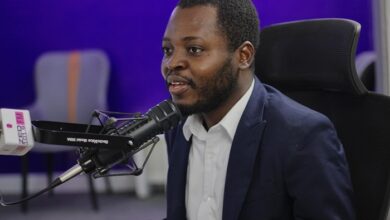
The Country Director of Exams Ethics Marshals International, Dr Kofi Ashieboe-Mensah, has cautioned that excessive political interference is eroding the foundations of Ghana’s educational system.
Speaking on The Focus on Zed 101.9FM, Dr Ashieboe-Mensah lamented that successive governments continue to alter policies for political gains instead of following the established blueprint of the Ghana Education Service (GES) and the Ministry of Education.
“Politics is ruining our educational system. A politician will come and change the system, and that becomes the order of the day. Meanwhile, there is already a blueprint that must be followed,” he stressed.
Dr Ashieboe-Mensah also questioned the implementation of the constitutional provision on Free, Quality and Compulsory Basic Education (FQIP). According to him, the policy exists only in name, as the necessary infrastructure and resources are lacking.
“Where is the FQIP? Free, Compulsory, Basic Education. Where is it? It sounds nice, but our foundation must first be strong. How can it be free when pupils don’t have classrooms and teachers don’t have electricity to charge their phones?” he asked.
Dr Ashieboe-Mensah explained that free education should not be understood solely in terms of the absence of fees but also in the provision of adequate infrastructure, learning tools and resources to support teaching and learning.
“Free education is not just about the fees you pay. The foundation must be solid, and all attention must go to the basics,” he emphasised.
Dr Ashieboe-Mensah called on policymakers to prioritise strengthening the basic education system to ensure that Ghana builds a strong foundation for future generations.
Ghana’s educational system has long been shaped by political reforms introduced by successive governments.
While policies such as the Free Compulsory Universal Basic Education (FCUBE), introduced in the 1990s, and the current Free Senior High School programme have been hailed as landmark initiatives, their implementation has often faced challenges due to inadequate infrastructure, under-resourced schools and teacher shortages.