

Borrowing focused on transformational projects – Finance Minister
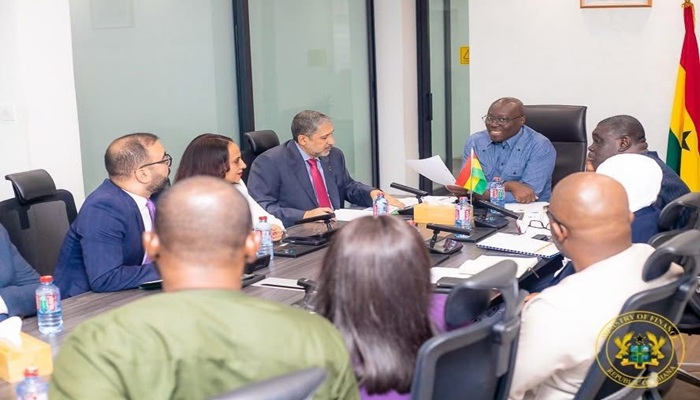
The Finance Minister Dr Cassiel Ato Forson has assured that Ghana’s borrowing strategy will remain disciplined and focused on transformational, growth-oriented projects, as the country records notable gains in debt sustainability.
Speaking in Accra during a meeting with Abdullah KH Almusaibeeh, President of the Arab Bank for Economic Development in Africa (BADEA), Dr Forson emphasised that future borrowing will be strictly tied to projects with lasting economic and social impact, rather than short-term consumption.
“Our commitment is clear. New debt must drive transformation. We will borrow only when the investment delivers long-term value for citizens and the broader economy,” the Minister said.
Debt Levels Showing Improvement
Recent data from the Bank of Ghana indicate that Ghana’s total public debt fell from GHS763.8 billion, representing 64.9 per cent of GDP in July 2024, to GHS628.8 billion or 44.9 per cent of GDP by July 2025.
The sharp decline reflects a combination of fiscal consolidation measures, successful debt restructuring efforts and stronger revenue mobilisation.
Dr Forson explained that the government intends to build on this momentum by prioritising capital projects that can generate sustained economic returns, enhance productivity and create employment.
Infrastructure Priority
Highlighting infrastructure as a central pillar of the country’s growth strategy, the Minister cited the planned Accra–Kumasi motorway project as an example of the type of investment that qualifies for carefully managed borrowing.
Feasibility studies are already underway, and construction is expected to be completed within two and a half years, significantly easing transportation of goods and passengers along Ghana’s busiest corridor.
BADEA Support
Mr Almusaibeeh commended Ghana’s renewed commitment to debt sustainability and its focus on transformational development.
He pledged BADEA’s readiness to partner on large-scale projects of strategic economic importance, including critical transport and energy infrastructure.
The Finance Minister reiterated that Ghana’s medium-term economic framework places a premium on responsible borrowing, fiscal discipline and private-sector collaboration, assuring investors and development partners that the government will remain steadfast in protecting the country’s hard-won macroeconomic stability.



