

Xi calls for peace at 80th war anniversary parade
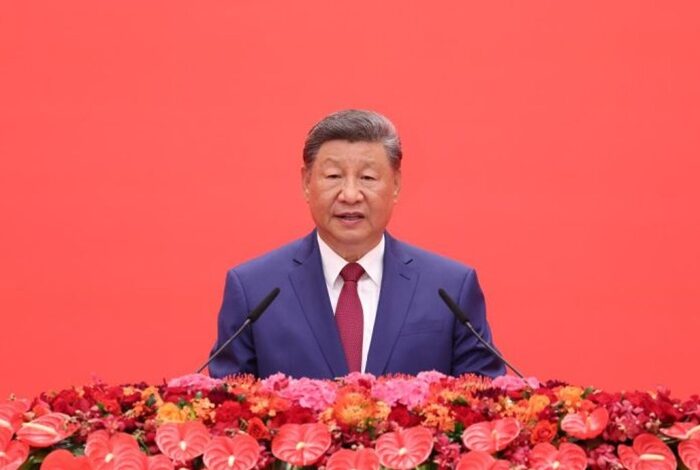
At Beijing’s Tian’anmen Square, Chinese President Xi Jinping, together with world leaders, attended a grand military parade on 3 September to commemorate the 80th anniversary of the victory in the Chinese People’s War of Resistance against Japanese Aggression and the World Anti-Fascist War.
Standing on the Tian’anmen rostrum, President Xi called on nations to eliminate the root causes of war and prevent history’s darkest tragedies from recurring.
He stressed that global security can only be achieved when countries treat each other as equals and build partnerships rooted in mutual respect.
Vision for Global Justice
Xi’s appeal goes beyond historical remembrance. It reflects his broader vision for a world that is just, equitable and prosperous. “The strong should not bully the weak,” he declared, adding that unilateralism and selective multilateralism undermine peace and stability.
Over the years, Xi has positioned China as a proponent of true multilateralism. From peacekeeping missions under the United Nations to facilitating Saudi-Iran reconciliation and co-founding the International Organization for Mediation in Hong Kong, China has sought to mediate conflicts and strengthen collective security frameworks.
Brazilian President Luiz Inacio Lula da Silva praised Xi’s sense of justice, saying he inspires humanity to “speak more of peace than of war, to cooperate more than compete, and to create more than destroy.”
Commitment to Development
A central pillar of Xi’s leadership is poverty eradication. Under his guidance, China eliminated absolute poverty in 2020, a decade ahead of the UN’s 2030 Sustainable Development Goals. Xi believes that “only when countries develop together can there be true development.”
This conviction has driven initiatives such as the Belt and Road Initiative (BRI), which has transformed infrastructure and trade links across Asia, Africa and beyond. From freight trains connecting China and Europe to modern railways in Kenya, the BRI is emblematic of Xi’s pledge to share China’s growth with the world.
Xi has also promoted grassroots solutions like Juncao technology, which provides sustainable farming tools to developing nations.
His book ‘Up and Out of Poverty,’ published in multiple languages, documents these ideas and their global resonance.
Champion of the Global South
Xi’s global vision places the Global South at the heart of international development. Drawing inspiration from the historic Bandung Conference of 1955, he has worked to amplify the voices of emerging economies.
The expansion of BRICS, the creation of the BRICS New Development Bank and China’s partnerships with Africa, Latin America and ASEAN are examples of how Xi has sought to reshape global governance in favour of inclusivity.
“The collective rise of the Global South is a defining transformation of our time,” Xi observed, pledging that China will remain rooted in solidarity with developing nations.
Toward a Shared Future
Xi has launched a series of initiatives, including the Global Development Initiative, the Global Security Initiative, the Global Civilization Initiative and most recently the Global Governance Initiative, all aimed at strengthening cooperation and improving international systems.
Malaysian Prime Minister Anwar Ibrahim likened Xi’s vision to Confucian values of universal brotherhood, while Tajik President Emomali Rahmon praised him as a leader with profound historical insight and global foresight.
Xi himself has summed up his philosophy simply: “On the road to the wellbeing of all mankind, no country or nation should be left behind.”



