

Africa risks digital colonisation without clear ownership policies — Prof Bokpin
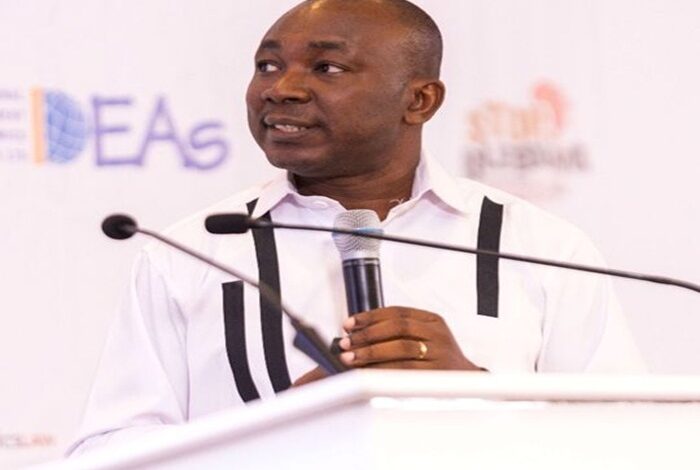
Economist and Finance Professor at the University of Ghana Business School, Prof Godfred Bokpin, has cautioned that Africa could once again lose out to the Global North if clear national and continental policies are not established to define ownership, access and benefits from its digital heritage.
According to him, Africa has already forfeited the first-mover advantage to advanced nations due to its failure to adequately invest in digitisation, including applications and other emerging technologies.
He stressed that the continent’s inability to keep pace has left it at a disadvantage.
Speaking in an interview on the sidelines of a panel discussion on a draft Black Paper, a Pan-African, decolonial framing of Africa’s transformation, Prof Bokpin emphasised that the future is digital and the digital economy, an economy based on apps and emerging technologies, is expected to expand faster than traditional economies.
He warned that digitisation is also set to replace jobs, a development that could further compound Africa’s challenges.
In particular, he noted that in the case of cultural artefacts and related works, digitisation risked becoming a new form of colonisation, given the lack of proper frameworks and secure property rights.
Prof Bokpin underscored the urgent need for national and continental frameworks to safeguard ownership, warning that failure to do so could force Africa into yet another struggle for digital justice and equity.
He suggested that the pursuit of digitisation should be integrated into broader conversations around debt justice and reparations.
“It should be part of the conversation, because digitisation is not a standalone. It is a crosscutting intervention, part of the economic, social and religious contexts and others. This is the kind of integrated approach we should be adopting; otherwise, we will lose out,” he explained.
Prof Bokpin’s remarks come against the backdrop of the African Union’s 2025 theme of the year, Justice for Africans and People of African Descent Through Reparations, which calls for addressing historical injustices suffered by Africans and the diaspora.
The issue of cultural heritage remains central to this debate. Recently, several artefacts were returned to Ghana from the United States and the United Kingdom.
The United States museum handed over seven royal artefacts looted 150 years ago, while the United Kingdom returned 32 gold and silver treasures from the Asante kingdom on a six-year loan.
These included a sword of state, a gold peace pipe and other royal items. The development has been described as a significant step towards repatriating Africa’s cultural heritage.
The draft Black Paper panel session took place during the fifth edition of the African Conference on Debt and Development (AfCoDD V) in Accra.
The three-day event, organised under the theme Africa’s Debt Crisis: A Reparations and Reparative Justice Framework Analysis, was hosted by the African Forum and Network on Debt and Development (AFRODAD) in partnership with International Development Economics Associates (IDEAs) and the Stop the Bleeding Campaign.
The Black Paper seeks to provide a new roadmap for discourse on Africa’s development finance, addressing the role of debt, illicit financial flows and other economic factors that undermine the continent’s transformation pathway.
It was developed under the stewardship of the Stop the Bleeding Campaign.



