

Ghana Risks 18th IMF Bailout without Structural Reforms – IEA Warns
By Praisebell Rosemond Larbi
The Institute of Economic Affairs (IEA) has cautioned that Ghana could be forced into a return to the International Monetary Fund (IMF) for what would be its 18th bailout, if the country fails to undertake bold and lasting structural reforms.
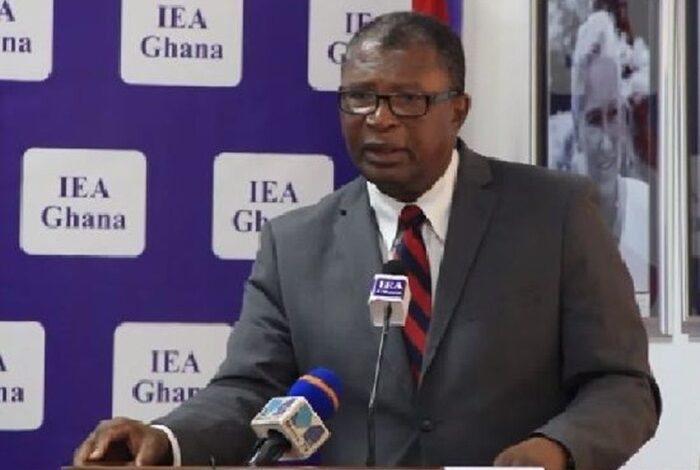
Board Chairman of the IEA, Dr. Charles Mensa, noted that Ghana’s economy has long been plagued by deep-seated vulnerabilities, particularly in fiscal management and resource governance. He stressed that without decisive policy shifts, the cycle of boom-and-bust crises will persist, compelling the nation to rely on repeated external interventions.
“For the record, we have been to the IMF for the seventeenth time, asking for a bailout — meaning we have gone bankrupt seventeen times,” Dr. Mensa said at a Roundtable Discussion on “The Mining Regime in Ghana.” “Ghana is one of the largest gold-producing countries in the world, yet with all these resources, we keep going bankrupt. Why is that? It is because we have no control over our natural resources.”
He warned that unless Ghana leverages its mineral wealth effectively, strengthens domestic revenue mobilization, and builds fiscal resilience, another bailout will become inevitable. “If we don’t own our resources, we will continue to operate under this same model and very soon we will go to the IMF again for the 18th time,” he added.
Ghana’s history with the IMF dates back to 1966, following the overthrow of President Kwame Nkrumah by the National Liberation Council (NLC). At the time, the new administration sought IMF and World Bank assistance to stabilize the economy through privatization and restructuring of state-owned enterprises. Since then, Ghana has alternated between reform programs and fiscal slippages, often returning to the Fund during crises.
Currently, Ghana is under a $3 billion, three-year IMF Extended Credit Facility (ECF), launched in 2023 to restore macroeconomic stability and manage a crippling debt burden. The program is scheduled to conclude in the first quarter of 2026. So far, implementation has stayed largely on track, with some improvement in fiscal indicators and investor confidence.
However, economic analysts argue that the real test lies beyond 2026, when the program expires. Without continued fiscal discipline, sustainable debt management, and structural reforms to diversify the economy, Ghana risks slipping back into the same cycle that has forced repeated IMF interventions.
Dr. Mensa emphasized that the ultimate solution lies not in external bailouts but in domestic ownership of resources, improved revenue collection, and transparent fiscal governance. He argued that unless these measures are pursued with urgency, Ghana’s economy will remain vulnerable to shocks, leaving its future tethered to the IMF.



