

$10bn ‘Big Push’ targets Japanese partnerships for growth
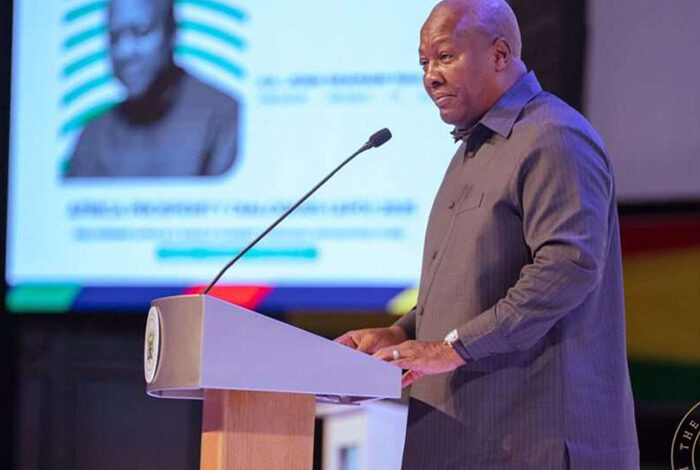
President John Dramani Mahama has called on Japanese businesses to seize emerging investment opportunities in Ghana, as part of his ambitious USD10 billion ‘Big Push’ economic transformation programme.
Speaking at the Ghana Presidential Investment Forum, held on the sidelines of the 9th Tokyo International Conference on African Development (TICAD IX), President Mahama described Ghana as a stable, democratic, and business-f0riendly gateway to West Africa and the wider continent.
“Ghana is a stable, democratic, business-friendly gateway to West Africa and the continent. We have a growing consumer market with improving macroeconomic fundamentals, clear reforms to lower the cost of doing business, and abundant opportunities for technology transfer,” he stated.
President Mahama emphasised Ghana’s strategic location and its role as host of the African Continental Free Trade Area (AfCFTA), positioning the country as an ideal hub for Japanese investors seeking access to regional markets.
“Ghana is a country through which the meridian and the UK intersect, just a few kilometres from our shore. And we are proud to host the African Continental Free Trade Area,” he stated.
Economic Gains and Currency Stability
Highlighting macroeconomic progress, President Mahama pointed to falling inflation and a stabilised cedi, which he described as the world’s best-performing currency this year.
“Inflation rose to a high of almost 23 percent in 2024. It’s currently down to 13.7 percent, and we expect it to hit single digits by year-end. The cedi has also stabilised. A few years ago, it was among Africa’s most volatile currencies, now, I’m happy to announce it is the best-performing currency in the world,” he noted.
Investment Reforms and Sectoral Opportunities
President Mahama also announced reforms to the Ghana Investment Promotion Centre Act, aimed at easing barriers for smaller investors.
“We are removing minimum capital requirements. This means any investor, whether you have USD100,000 or USD50,000, can come in and set up a business in Ghana,” he explained.
President Mahama encouraged Japanese firms to explore opportunities in agribusiness, automobile manufacturing, and energy, sectors where Ghana holds significant potential.
On agribusiness, he cited Ghana’s vast land, abundant sunshine, and the Volta Lake as key enablers for irrigation, agro-processing, and textile production for export.
“We have millions of hectares of land bordering the lake, which can irrigate up to 2 million hectares. We also plan to establish industrial parks to process agricultural products and manufacture textiles for export to the EU, the US, and beyond,” he explained.
Powering the Region
President Mahama highlighted Ghana’s comparative advantage in power generation, built on hydropower and gas-to-power systems, which enable surplus electricity exports to neighbouring countries at competitive prices.
“Our thermal plants run on gas, and new gas fields are coming online. As members of the West African Power Pool, our transmission systems are interconnected with neighbouring countries. Any excess power we produce can be exported,” he indicated.
Ghana–Japan Partnership
The USD10 billion ‘Big Push’, he added, will drive infrastructure development, food security, supply chain resilience, and industrial growth, positioning Ghana as Africa’s manufacturing hub.
Calling for deeper ties with Tokyo, President Mahama urged joint ventures and partnerships between Japanese and Ghanaian firms.
“Africa is the next frontier for investment. Most parts of the world are saturated. Africa is opening up, growing, and Japan should be looking here. Let us marry Japanese precision with Ghanaian potential and create a win-win situation,” he emphasised.
President Mahama also reaffirmed Ghana’s commitment to economic transformation and international cooperation: “Ghana is open for business 24 hours a day. We are embracing a bold vision, one that harnesses innovation, industrialisation, and regional integration to unlock the full potential of our people and our resources.”



